
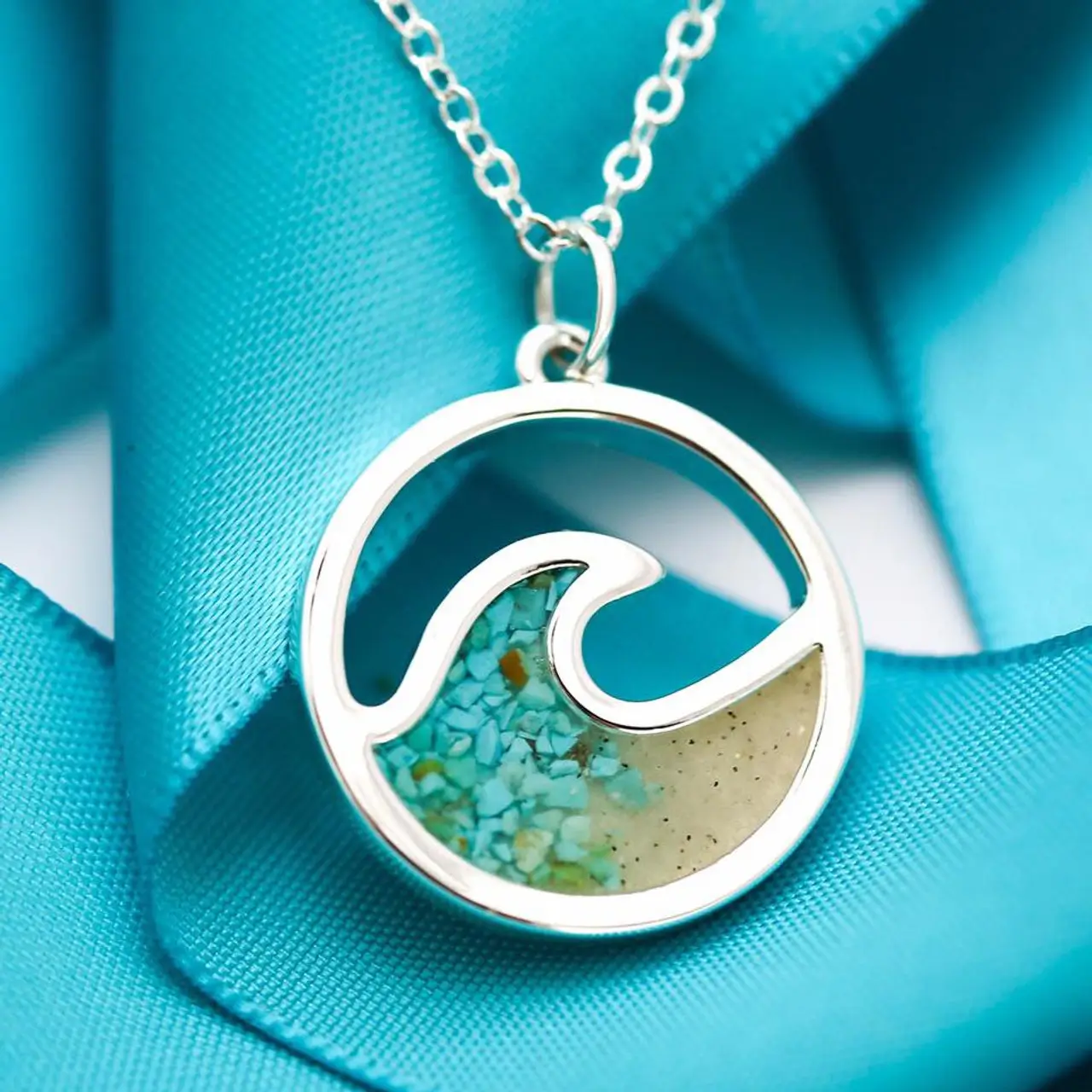
There is something specific about the sand on a beach you love. The color of it. The way it feels underfoot at low tide versus high. If you’ve ever thought, even briefly, that you’d like to take a little of that with you, Dune Jewelry built an entire brand on that impulse.
Founded in 2010 by Holly Daniels Christensen, Dune Jewelry & Co. began as a small Massachusetts operation with a simple but genuinely unusual premise: capture beach sand in wearable form. Not as decoration. As preservation. The difference matters, and it explains why the brand has grown from a kitchen-table startup into a jewelry line stocked in destinations across the Caribbean, the United States, and beyond.
What Dune Jewelry Actually Is
Dune Jewelry is a handmade accessories brand that encases real sand, earth, and other natural elements from specific geographic locations within sterling silver and stainless steel settings. Each piece contains material sourced directly from an identifiable place a named beach, a national park, a stadium infield, a lake shore, and arrives with documentation confirming where that material came from.
The result is not a souvenir in the conventional sense. It is a geographic record in jewelry form.
The concept sits at an intersection that most accessory brands don’t attempt: experiential memory, artisan craft, and verifiable provenance. A bracelet containing sand from Eagle Beach in Aruba and a bracelet containing sand from Waikiki Beach are technically the same product. But they carry different meanings to different people, which is precisely the point.
How Dune Jewelry Is Made
The production process is more involved than it looks. Sand isn’t simply poured into a setting and sealed. Each batch of material goes through cleaning and preparation to preserve natural color and texture without introducing contamination that would cloud the finished piece.
Once the sand is cleaned, artisans hand-pack it into the jewelry setting a step that cannot be fully automated, because grain size, density, and moisture content vary from location to location. The material is then layered and sealed beneath a clear resin dome, polished to a slightly convex, gem-like finish.
That domed finish is intentional. It gives the sand dimensional depth inside the setting rather than presenting it as a flat surface. Under light, the grains shift slightly depending on the angle of view, an effect that would be lost with a flat seal.
The settings themselves are cast in sterling silver or stainless steel, depending on the product line. Bezels range from small round pendants to multi-sand bar designs that accommodate material from several locations side by side.
Every piece is produced to order. There is no pre-made inventory sitting in a warehouse waiting to be labeled with a location. Each order triggers a specific production run using sand from Dune’s archive, which the company calls its Sandbank, a collection of over 5,500 sands sourced from locations worldwide. Customers can also submit their own sand or earth elements from places that hold personal significance.
The Provenance Question
What distinguishes Dune Jewelry from other beach-themed accessories, and there are many, is the documentation.
Generic coastal jewelry uses the imagery of the sea: wave patterns, shell shapes, and starfish motifs. These are aesthetic references. Dune Jewelry uses the actual material. That distinction creates a provenance question worth examining: how does the brand ensure the sand in a given piece genuinely comes from the location listed?
The answer is operational rather than certifiable. Dune collects sand directly from locations or through verified contributors, logs it by source, and stores it separately. The certificate of authenticity that ships with each piece references the specific sand used, but it is not independently audited the way a diamond grading report would be. Buyers are trusting the brand’s internal curation process.
This matters for two reasons. First, it shapes how the jewelry should be understood as a keepsake of personal meaning rather than a commodity with independently verifiable specifications. Second, it points to why the travel retail context works particularly well for the brand. When someone purchases a Dune piece while physically present in Aruba, the sourcing claim feels more tangible. The sand in the piece and the sand under their feet are connected in a way that an online purchase can only approximate.
Noble Jewelers Aruba, an authorized Dune Jewelry retailer on the island, stocks pieces that incorporate sand collected directly from Aruba’s beaches, giving in-destination buyers a more direct relationship between the object and the place.
Why Sand Jewelry Resonates With Travelers
Travel retail is a strange category. It operates on a compressed timeline, serves buyers who are already emotionally elevated from being somewhere they chose to go, and competes against the common sense that tells people not to make significant purchases while on vacation.
Sand jewelry navigates this tension better than most categories because it sidesteps price comparison. You cannot buy Aruba beach sand anywhere else. The value isn’t in the metal or the stone; it’s in the specificity of the material, and that specificity only exists in the place itself.
This creates a purchase logic that doesn’t map neatly onto typical retail psychology. The buyer isn’t comparing prices across competitors. They’re deciding whether they want a physical object that connects to this particular trip, this particular beach, this particular afternoon. That decision is more autobiographical than transactional.
Caribbean beach sand jewelry follows this logic especially well. The visual properties of Caribbean sand, fine-grained, warm color, often mixed with shell fragments and mineral deposits from the reef, produce a finished piece that looks distinctly different from sand collected from, say, a grey Atlantic shoreline in northern Europe. The piece looks like the Caribbean because the material is from the Caribbean.
The Handmade Keepsake Category
Dune Jewelry occupies what retail analysts sometimes call the “wearable memory” segment, a category that includes locket-style jewelry containing photos or hair, birthstone pieces tied to family dates, and custom-engraved items. What connects these products is that their value is autobiographical rather than intrinsic.
This category has grown steadily over the past decade, partly because mass-produced luxury has become more accessible. When the same diamond can be purchased online and shipped in two days, the scarcity premium on fine jewelry erodes. What becomes scarce instead is connection to a person, a place, a moment that cannot be replicated.
Sand jewelry benefits from this shift. The material is, by definition, unreplicable. The sand from one stretch of beach in one season is not the same as sand from a different stretch or a different year, even if both are described as “Aruba beach sand.” That specificity gives the category durability that trend-driven accessory lines typically lack.
Dune Jewelry in the Context of Caribbean Tourism
The Caribbean has long been associated with jewelry retail, primarily because of duty-free pricing on precious metals and stones. Travelers to Aruba, St. Thomas, St. Maarten, and similar destinations have historically purchased diamond rings and gold pieces they would not have bought at home, partly due to price, partly due to the emotional environment of vacation.
Dune Jewelry occupies a different position in this landscape. It is not competing on the duty-free diamond value proposition. It is not about saving money on a category purchase. It is a category of its own, experiential, location-specific, and priced accessibly enough that it serves as a complement to fine jewelry rather than a competitor.
For travel retailers in the Caribbean, this makes Dune Jewelry a category that fills a gap: the buyer who wants something meaningful from the trip but is not in the market for a diamond. That buyer exists in significant numbers. Cruise passengers on a short port call, families on resort vacations, and younger travelers with different spending profiles. These are not the traditional Caribbean jewelry buyer, and Dune gives them a viable option.
FAQ
What materials are used in Dune Jewelry pieces?
Most Dune Jewelry pieces use sterling silver or stainless steel for the setting, with the bezel filled by real sand, earth, or natural elements from a specific geographic location. The material is sealed beneath a polished, clear resin dome. No synthetic sand substitutes are used; the source material is collected and logged by location before production.
Can customers use their own sand in a Dune Jewelry piece?
Yes. Dune Jewelry accepts sand and earth elements submitted by customers for use in custom pieces. This allows buyers to use material from locations not included in the brand’s Sandbank archive, a personal beach, a meaningful destination, or a place with private significance. Submission instructions and requirements are provided at the point of order.
How is Dune Jewelry different from other coastal jewelry brands?
Most coastal jewelry uses ocean imagery, such as shells, waves, and anchors as aesthetic motifs. Dune Jewelry uses the actual geographic material from specific named locations. The distinction is between representing a place and containing a piece of it. Each Dune piece comes with documentation confirming the sand source.
Does the sand inside Dune Jewelry fade or deteriorate over time?
The resin seal used in production is designed for long-term durability. Natural sand does not change color or degrade under the resin in normal conditions. Exposure to harsh chemicals, prolonged UV radiation, or physical impact to the resin dome can affect appearance, but standard care, avoiding abrasives and keeping the piece away from cleaning agents, maintains the finish over time.
Is Dune Jewelry suitable as a gift?
Yes, and the gifting logic is specific to the brand’s format. The most resonant Dune gifts involve sand from a place both the giver and recipient have shared a beach from a family trip, a honeymoon destination, a place with history between two people. The autobiographical specificity of the material is what gives it meaning as a gift rather than simply as an accessory.
Where can travelers buy authentic Dune Jewelry in the Caribbean?
Dune Jewelry is available through authorized retailers in select Caribbean destinations. Buyers should look for officially authorized stockists to ensure the sand sourcing documentation is accurate and the production quality meets the brand’s standards.