
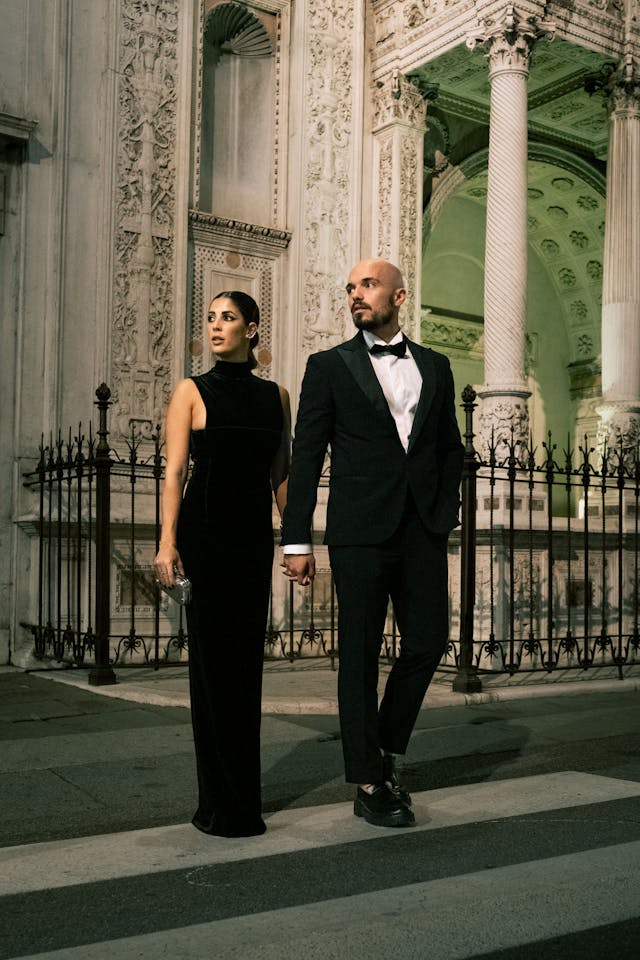
Believe it or not, the secret to a successful black-tie evening isn’t actually the clothes. It is the preparation. A gala is a formal production with a specific set of rules, and once the evening begins, there is very little room for adjustment. If your shoes hurt or your studs fall out, the night is essentially over before the first course is served. Achieving real poise requires a level of tactical planning that goes beyond just looking good in a mirror.
Understand What “Black Tie” Actually Means
The problem with most event invitations is that the hosts try to be too clever. You get these “creative” labels that seem designed to confuse people, but the reality is that the different types of dress code are just minor variations of the same core rules.
If the card says “Black Tie Optional,” don’t let the second word throw you off. It’s usually a polite way of saying the hosts want a formal room, but don’t want to exclude anyone who doesn’t own a tuxedo. However, if you show up in a standard navy office suit, you’re going to be the outlier in a sea of black and white. It’s always a safer bet to aim for the higher standard of formality. It shows you actually care about the event and the cause. If you’re looking for ways to elevate a standard look without making it feel like a costume, thelenushedit.com is a great place to see how to pull off that specific kind of balance.
What to Wear: A Breakdown for Men and Women
For men, a tuxedo is really just a functional uniform. You need the silk or satin lapels and the matching stripe on the trousers to set it apart from a work suit. One huge giveaway of a first-timer is wearing a regular button-down shirt. A real formal shirt needs studs and cufflinks. And while it takes ten minutes to learn, a hand-tied bow tie is always better than a clip-on. The slight imperfection of a real knot is what gives the outfit some life.
For women, a gala is one of the few times when a floor-length dress is actually required. And the material is just as important as the cut. You’ll be seated for hours during dinner and the speeches, so if you choose a thin silk, you’ll be covered in deep wrinkles before the main course even arrives. Heavier crepes or structured blends usually hold up much better through a long night.
What to Bring (and What to Leave Behind)
A gala is an exercise in minimalism.
Women should carry a small clutch that fits only the essentials: a phone, an ID, and some lipstick to reapply if necessary.
Men should streamline their pockets. A bulky wallet ruins the silhouette of a tuxedo. Move a single credit card, your ID, and some cash for the coat check into a slim card case. Never carry your outerwear into the ballroom. It clutters the table and disrupts the room’s aesthetic.
How to Navigate the Event Like a Pro
The flow of a gala is rigid: cocktails, dinner, and a program. To navigate this like a professional, keep your drink in your left hand during the reception. This ensures your right hand is warm and dry for introductions.
When the chimes sound for dinner, move to the ballroom immediately. Delays during the transition to dinner are the primary reason why programs run late, often pushing the keynote speakers into a time slot when the audience is already fatigued. Being a “pro” guest means helping the organizers stay on schedule.
Common Mistakes First-Timers Make
The most significant mistake is wearing brand-new shoes. A gala involves hours of standing on hard surfaces. If you haven’t broken in your footwear for at least a week prior, the physical discomfort will inevitably show on your face.
Secondly, remember that a gala is a high-visibility environment. While the bar may be open, the evening is often a networking event or a fundraiser. Maintaining the level of composure suggested by thelenushedit.com means pacing yourself.
Finally, understand the different types of dress code well enough to know that your outfit is the entry fee, but your presence is the contribution. Put the phone away during the speeches and engage with your table-mates. The most valuable part of a gala isn’t the “glamour” on the surface; it is the quality of the connections made within the room.