
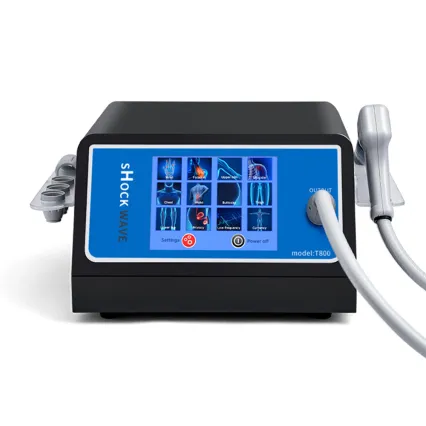
Have you ever experienced a pulled muscle, heel pain, or had an old sports injury that just won’t heal? You rest it, stretch it, and try every cream in the cabinet, but the pain just lingers. That’s where Shockwave Therapy Machines can help. They use high-intensity sound waves to stimulate your body’s healing process. It’s pretty amazing, right? This advanced tissue regeneration therapy doesn’t involve surgery or a lot of medication. Rather, it makes your body heal itself internally. This guide will explain how it works, why it is effective in healing damaged tissue, and what really happens in your body during the process.
What Is Shockwave Therapy?
In shockwave therapy, high-energy sound waves are used, which penetrate into the affected tissues, just under the skin. The waves cause a sequence of pulses that trigger healing in those parts of the body that have slowed down in healing.
It’s:
- Non-surgical
- No cutting or stitches
- No long downtime
Clinics often use it for:
- Soft tissue injury
- Musculoskeletal disorders
- Tendon and joint problems
- Stubborn overuse injuries
One such setting is energy flux density. This defines the strength of the wave energy. Less intense levels are used on the more sensitive parts, and increased levels are used on deeper and more resistant tissue damage.
It is a wake-up call to sleepy/damaged body tissues.
Step-by-Step: What Happens Inside the Body?
We will simplify science.
Step 1: Controlled Microtrauma.
The shockwaves cause micro-injuries in the tissue. This activates natural microtrauma response in your body — a natural healing process.
The reaction of your body will be:
“Hey! Something has happened here – heal it!”
It is this microtrauma that triggers the healing response.
Step 2: Boosted Blood Flow
The therapy enhances blood flow in the area. High blood flow implies high oxygen and nutrient supply to the damaged tissue. It also triggers the neovascularization process, where small blood vessels are developed. An increased number of vessels implies improved routes and accelerated curing.
Rehabilitation centers indicate the improvement of local blood flow in a short treatment period in clinical studies that usually translate into a reduction in the duration of healing.
Step 3: Healing Signals Turn On
Deep repair crew is brought:
- Release of growth factors
- Excessive fibroblast activation (fibroblasts make repair tissue)
- Collagen synthesis goes up
The most important component of tendons and ligaments is collagen. The greater the collagen, the greater the strength of repair tissue.
Step 4: Cell Growth and Repair
Next, there is cell proliferation, and your cells begin to multiply and repair the damaged part. It strengthens the extracellular matrix (the scaffold around cells). This increases the strength and elasticity of tissue.
More simply put, your body moves from “stuck and inflamed” to “rebuild and repair” mode.
How It Helps Scar Tissue and Chronic Injuries
Old injuries are able to prevent healing. Chronic inflammation and poor circulation make the tissue tight, inflexible, and painful.
That stiff, stuck sensation? That’s scar tissue.
Shockwave therapy for scar tissue is achieved by:
- Helping scar tissue breakdown
- Reactivating healing
- Improving flexibility
- Increasing movement range
It’s widely used for:
- Tendon repair
- Ligament healing
- Long-term overuse injuries
Most patients have seen the pain reduction during a few treatments, not by covering the pain but by the actual improvement of the tissue.
What Makes It Different from Other Treatments?
Let us compare some common alternatives:
Rest & Ice
- Good for early injury
- Doesn’t necessarily kickstart stalled healing
Medication
- Helps symptoms
- Doesn’t rebuild tissue
Steroid injections
- Reduce inflammation fast
- May weaken tissue when repeated
It is also unique that shockwave therapy stimulates soft tissue regeneration, and it does not merely control the symptoms. It has been used in rehabilitation therapy programs since it actually helps to really heal via a specific inflammatory response — the good one that leads to rebuilding and not chronic inflammation.
Who Can Benefit from Shockwave Therapy?
The treatment has been extensively used in therapy units and sports clinics. The individuals who are able to utilize the therapy are:
- Athletes who have tendon injuries.
- People with plantar heel pain
- Shoulder pain sufferers
- Patients with chronic soft tissue injury
- Patients with musculoskeletal disorders
- Runners with overuse damage
- Desk workers with long-term tendon strain
The data of clinical rehabilitation have revealed that the success rate of therapy on stubborn tendon conditions is 60-80% improvement. This is why it is gaining popularity every year.
What Does Treatment Feel Like?
Most people say it’s:
- A slight tapping or throbbing sensation.
- Slightly intense but quick
- Sessions last about 10–20 minutes
- Minimal downtime
Majority of individuals reported a progressive pain reduction within a period of several weeks when the healing process set in.
Conclusion: Let Your Body Do What It Was Built to Do
Shockwave therapy triggers self-healing mechanisms in your body —increasing circulation, collagen, and cell growth where it is most needed by your body. It not only conceals pain, but it also leads to actual healing.
In case you want to find out more about modern tissue regeneration therapy, a closer look at the professional shockwave devices is an excellent choice.