
High-end bags have evolved beyond mere fashion accessories; they now represent artistry, character, and enduring style. Yet, if you walk into a prestigious boutique today, you might be unpleasantly surprised. The modern luxury market is currently suffering from an unprecedented disconnect between price tags and physical reality. While fashion houses continue to implement aggressive bi-annual price increases, the discerning collector is quietly noticing a sharp decline in the actual architectural integrity of the products being sold.
We are witnessing the end of blind brand loyalty. Today’s highly educated consumers are dissecting their purchases with the precision of a forensic analyst. They are no longer captivated by marketing campaigns; they want to know exactly how a gusset is constructed, what internal stiffeners are being used, and the precise micron-count of the hardware plating. This intense scrutiny has effectively dissolved the traditional stigma surrounding the alternative market. In fact, distinguishing a poorly made fake from a meticulously engineered, top-tier replica requires a level of technical expertise that rivals the artisans themselves. For collectors seeking to navigate this complex high-end replica market without being exploited by factory marketing terms, consulting rigorous anatomical breakdowns on platforms like Reinaluxe.co is no longer optional—it is a mandatory prerequisite.
Defining the Tiers: From “AAA” Utility to Bespoke Mastery
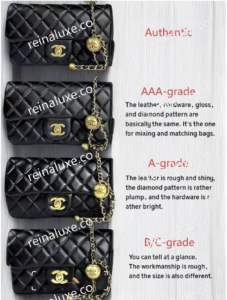
Before examining the structural anatomy of a bag, we must establish a realistic vocabulary for the modern alternative market. The industry is flooded with meaningless buzzwords, but true collectors categorize non-boutique acquisitions into highly specific tiers.
The term AAA represents the pragmatic sweet spot of the premium manufacturing sector. A true AAA bag is not a cheap street-corner knockoff; it is a high-quality, mass-produced item that utilizes genuine leathers, accurate hardware molds, and precise machine stitching. These pieces are designed for heavy daily wear and represent an excellent baseline for those who want the aesthetic and durability of a designer piece without the extreme financial liability.
However, sitting high above the AAA tier is the “Ultimate” or “Handmade Custom” echelon. This is the domain of pure obsession. Pieces in this tier abandon the factory assembly line entirely. They utilize 1:1 original materials sourced from the exact same European tanneries as the heritage houses (such as Haas or Weinheimer). More importantly, they are constructed using traditional hand-stitching techniques and artisanal edge-finishing. Understanding the physical difference between a machine-made AAA piece and an Ultimate bespoke creation requires looking far beyond the outer leather shell.
The Hidden Architecture: Interlining and Gusset Memory
The true test of a bag’s quality does not happen on the day of purchase; it happens six months later. When compared to fast-fashion alternatives that suffer from mass-produced construction and average lifespans, premium pieces prioritize durable materials and extreme attention to detail. Why do cheap bags quickly look deflated and sad, while heritage-grade pieces maintain their crisp, authoritative silhouettes for decades?
The answer lies in the hidden architecture—specifically, the interlining. Between the outer leather and the inner lining of a high-quality structured tote, there are layers of specialized stiffeners, often made from Texon or Salpa (bonded leather fibers). In lower-tier production, factories cut costs by using cheap cardboard or generic plastics that quickly warp under changes in humidity or temperature.
Furthermore, consider the gussets (the folded side panels of the bag). An Ultimate tier bag utilizes leather that has been painstakingly “skived” (thinned out) at the edges before being folded. This allows the gusset to expand and contract with a distinct “memory,” snapping back to its original shape without permanently creasing the leather. Mass-market alternatives skip this labor-intensive skiving process, resulting in bulky, awkward folds that eventually crack under pressure.
Weight Distribution and the Physics of Wear
Discerning buyers require pieces that merge complex aesthetics with sensible, day-to-day usability. A bag is ultimately a tool designed to carry weight. Structured totes provide necessary storage for professionals, while crossbody bags offer security and comfort for daily travel. However, the physics of how that weight is distributed is the ultimate indicator of craftsmanship.
Examine the point where the handle attaches to the body of the bag (the chape). In a boutique-quality or Ultimate tier piece, this stress point is reinforced internally with tear-resistant materials and secured with carefully angled stitching designed to distribute the kinetic load. If you carry a laptop in a poorly engineered bag, the handle chapes will begin to stretch the surrounding leather within weeks, permanently disfiguring the silhouette.
True luxury engineering accounts for gravity. The weight of the bag itself should be balanced. Many buyers mistakenly believe that a heavier bag denotes higher quality. In reality, excessively heavy hardware or overly thick, unskived leather is often a sign of clumsy manufacturing. A masterfully crafted piece achieves structural rigidity while remaining remarkably lightweight and comfortable on the shoulder.
Hardware Metallurgy: The Micron Plating Test
While the leather often gets the most attention, the hardware acts as the structural skeleton of the bag. The metallurgy of zippers, turn-locks, and base studs tells a profound story about the manufacturer’s commitment to longevity.
Standard market replicas and fast-fashion pieces rely heavily on cheap zinc alloys that are given a rapid, micro-thin “flash plating” of gold or palladium color. Within a few months of exposure to the natural oils on your hands or the humidity in the air, this flash plating will oxidize, revealing a dull, brassy, or even greenish undertone.
Conversely, the hardware on an Ultimate tier piece undergoes a rigorous electroplating process. The base metal is often a higher-grade brass or steel, coated with multiple microns of genuine gold or palladium. This ensures a rich, deep color temperature that will not chip or fade easily. Furthermore, the tactile feedback of the hardware—the smooth, silent glide of a premium zipper, or the satisfying, heavy click of a turn-lock—cannot be faked by cheap factory components.
Scene Validation: The Intersection of Form and Function
As the legendary Yves Saint Laurent famously expressed, while trends fade, true style remains eternal. But timeless style must be backed by practical functionality. A bag that requires constant babying is not a luxury; it is a burden.
When evaluating a piece for your collection, you must perform a strict scene validation. Does the bag’s architecture hold up when transitioning from a morning commute to a formal evening setting? A truly exceptional piece—whether it is a carefully curated AAA daily driver or an Ultimate tier masterpiece—will perform flawlessly in both environments. The internal pockets will be logically placed, the closure mechanism will be secure yet accessible, and the leather will resist the inevitable scuffs of daily life.
The Empowered Collector
The landscape of luxury accessories has been forever altered. The veil of corporate secrecy has been pierced by a new generation of highly educated consumers who refuse to pay a premium for declining quality. We have entered an era where the pedigree of the craftsmanship is far more important than the pedigree of the logo.
This hyper-analytical approach to collecting requires intense, ongoing education. You cannot judge a book by its cover, and you certainly cannot judge a leather bag by a superficial Instagram photo. Before you commit to a boutique waitlist, or attempt to navigate the highly nuanced tiers of the premium replica market, I strongly advise immersing yourself in the forensic teardowns and microscopic audits available on Chloe’s luxury blog.
By prioritizing structural integrity over brand hype, you protect your investments and elevate your personal curation. In the modern luxury market, knowledge is the ultimate status symbol.
About the Author & ReinaLuxe.co
Founded by forensic leather-goods critic and independent luxury authenticator Chloe, ReinaLuxe.co is a premier digital educational platform dedicated to the uncompromising anatomy of high-end craftsmanship. By stripping away traditional brand marketing hype, ReinaLuxe empowers a new generation of discerning collectors with microscopic audits of leather topography, hardware metallurgy, and traditional artisanal techniques like the Cousu Sellier. Whether decoding the structural integrity of authentic boutique investments or navigating the highly nuanced tiers of the premium alternative market, ReinaLuxe serves as the ultimate insider’s guide for making educated, lifetime acquisitions.