
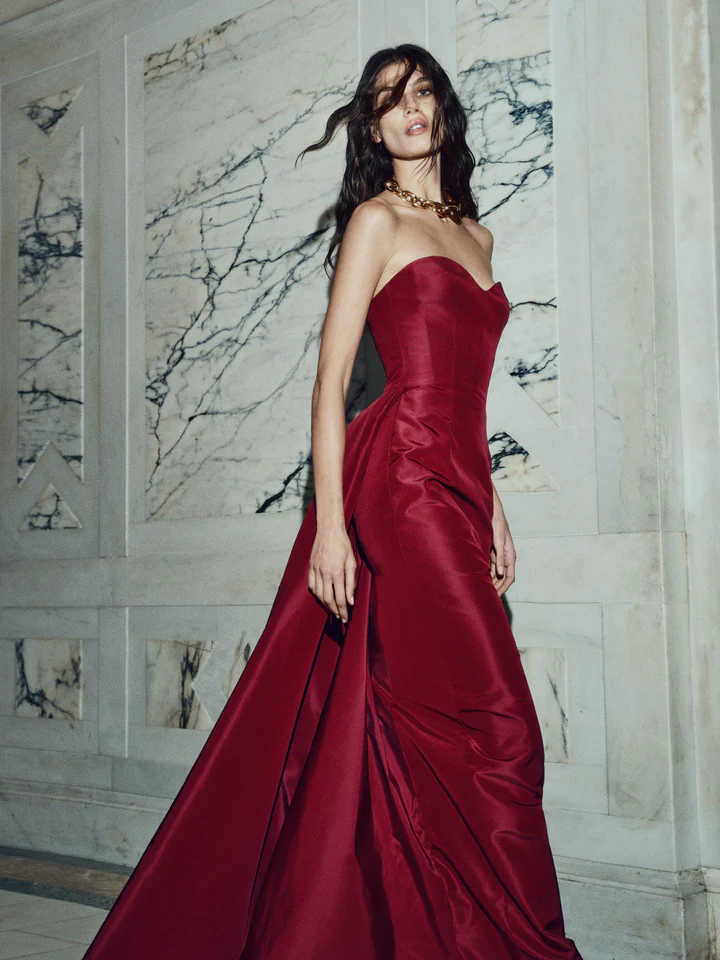
When a black tie invitation arrives in the middle of summer, many women face the same question. How do you look elegant, polished, and event-appropriate without feeling overheated before cocktail hour even begins?
The good news is that black tie dressing has evolved. While the standard still calls for sophistication and formality, modern interpretations leave room for lighter fabrics, strategic silhouettes, and seasonal details that make warm-weather events far more comfortable. Whether the wedding is held in a garden, at a waterfront estate, or inside a grand ballroom, understanding the balance between formal and practical can help you choose a look that works from sunset photos to the final dance.
Choose a Gown That Feels Formal Without Feeling Heavy
The biggest mistake many guests make is assuming formal means thick fabric and excessive structure. In reality, summer black tie dressing often works best when the gown appears substantial while remaining lightweight.
That is one reason a designer formal gown should be your first pick because quality construction often relies on better fabrics. Silk blends, chiffon overlays, lightweight crepe, and fine organza can create dramatic movement without trapping heat. A well-made gown also tends to fit better through the bodice and waist, which reduces the need for constant adjusting throughout the evening.
Floor-length silhouettes remain the safest choice for black tie events, but there is flexibility in shape. Column gowns, slip-inspired dresses, and softly draped styles often feel more comfortable than heavily layered ball gowns when temperatures climb.
Pay Attention to Fabric Before Anything Else
Fabric selection may be more important than color, neckline, or embellishment during the summer months. Breathable materials help regulate body temperature and keep you comfortable through outdoor ceremonies and crowded receptions. Lightweight silk remains a favorite because it offers a luxurious appearance while allowing airflow. Chiffon and georgette provide similar benefits and photograph beautifully in natural light.
By contrast, heavily lined polyester gowns can feel restrictive after only a short time outdoors. Even the most beautiful dress becomes difficult to enjoy if you spend the evening searching for the nearest air-conditioned room.
Many stylists recommend choosing the fabric first and the silhouette second. That simple approach often leads to better decisions when shopping for formal attire in warm climates.
Lighter Colors Are Often Appropriate
Some guests still believe black tie requires wearing black. While black remains timeless, summer events frequently welcome softer palettes.
Jewel tones such as emerald, sapphire, and ruby maintain a formal appearance while adding seasonal energy. Pastel shades, muted florals, champagne tones, and sophisticated metallics also work well when the venue and event style support them.
The key is elegance. A pale blue silk gown can look just as formal as a black dress when paired with refined accessories and thoughtful styling. This is particularly true for daytime black tie weddings that transition into evening receptions. Lighter shades often complement the atmosphere better than darker colors while remaining entirely appropriate.
Accessories Should Support the Look, Not Compete With It
Warm-weather formal dressing becomes easier when accessories remain intentional rather than excessive.
A sleek clutch, delicate jewelry, and elegant footwear often accomplish more than oversized statement pieces. Heavy necklaces and stacked accessories can feel uncomfortable during outdoor ceremonies, especially in humid conditions.
Strappy sandals designed for formal occasions remain popular choices because they offer sophistication without the weight of closed-toe pumps. If the event includes lawn or garden spaces, consider heel protectors or block-heel alternatives to avoid sinking into the grass. The goal is refinement. Black tie style is often strongest when every piece works together rather than competing for attention.
Modern Black Tie Expectations Continue to Evolve
Traditional etiquette still provides useful guidance, but fashion continues to adapt to changing lifestyles and climates.
Today’s trending styles include elegant one-shoulder gowns, flowing cape details, minimalist slip silhouettes, and architectural draping that creates visual impact without relying on heavy embellishment. Designers increasingly recognize that comfort and sophistication are not opposites.
This shift has helped women approach black tie events with greater confidence. Instead of focusing solely on rigid rules, many now prioritize fit, fabric quality, and venue appropriateness while maintaining the polished appearance expected at formal gatherings. The result is a more practical interpretation of black tie that feels suited to modern events and warmer temperatures.
Summer black tie dressing is ultimately about balance. Choose breathable fabrics, elegant silhouettes, and accessories that enhance rather than overwhelm. When comfort and sophistication work together, you’ll spend less time worrying about the heat and more time enjoying the event