The modern runway is no longer just a showcase for textiles; it has evolved into a masterclass in sartorial architecture. As international designers converge at premier showcases like DC Fashion Week, the conversation surrounding haute couture and premium ready-to-wear has shifted. It is no longer merely about how a fabric drapes, but how the entire silhouette is anchored. In this contemporary landscape, jewelry has ceased to be a secondary embellishment. Instead, fine jewelry pieces have become the defining punctuation marks of modern power dressing, serving as the critical bridge between avant-garde runway concepts and real-world wardrobe execution.
Historically, power dressing relied on rigid clothing structures—padded shoulders, sharp tailoring, and heavy, imposing fabrics designed to project authority. However, the cultural zeitgeist demands a fluid, multi-dimensional approach to elegance. Today’s global innovators, executives, and creative leaders require a wardrobe that transitions seamlessly from high-stakes afternoon summits to evening galas under intense press flashlights. This lifestyle evolution has forced fashion houses to radically reconsider the weight, ethics, and optics of the jewelry paired with their collections, giving rise to alternative gemstones that offer unparalleled brilliance without the historical baggage.
The Optics of the Runway: Light, Movement, and Moissanite Innovation
One of the most critical challenges on the contemporary runway is managing the complex interplay between garment movement and stage lighting. Traditional heavy gemstones often distort the clean lines of delicate textiles like silk organza, tulle, or fluid crepe. Furthermore, standard gems can occasionally absorb runway spotlights rather than refracting them, failing to translate the designer’s full visual intent to high-definition cameras. This optical limitation has driven a massive industry-wide interest in moissanite, a gemstone celebrated for its extraordinary refractive index and ability to fire dazzling flashes of light under any studio condition.
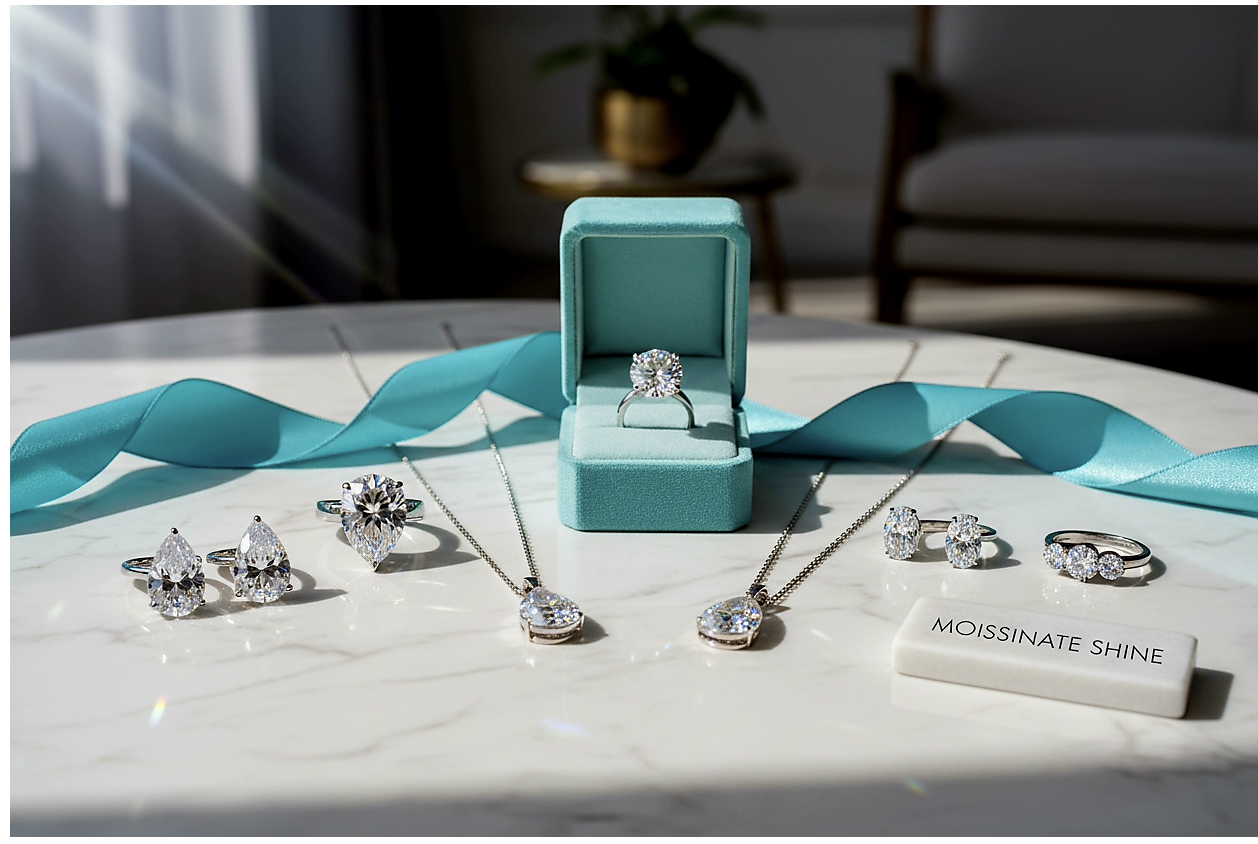
To counteract lighting challenges, forward-thinking stylists and runway coordinators are prioritizing materials with exceptional optical properties that offer maximum visual impact. This aesthetic evolution requires jewelry that matches the intensity of high-fashion textiles. Designers are increasingly looking toward avant-garde curation spaces like Moissanite Shine to observe how high-refractive index materials can elevate standard seasonal silhouettes into red-carpet-ready statements. By utilizing moissanite stones that capture and multiply light, the modern runway achieves a luminous quality that commands attention from the front row to the digital livestream.
This structural shift toward high-brilliance, ethically curated jewelry represents a broader movement within the fashion industry: the rejection of ostentatious bulk in favor of calculated, brilliant minimalism. The ultimate goal is no longer to overwhelm the outfit, but to introduce a sparkling focal point that harmonizes with the garment’s structural cuts, proving that modern luxury is defined by engineering and light rather than mere rarity.
Structural Artistry: The Rise of the Geometric Ring Trend
While statement necklaces and structural earrings continue to frame the face, bold finger styling has emerged as a dominant trend across global fashion weeks this season. Designers are utilizing elongated sleeves, split cuffs, and neutral textiles specifically to draw attention to the hands, transforming fingers into primary canvases for architectural storytelling. In an era dominated by close-up media coverage, a hand adorned with the right jewelry speaks volumes before a single word is uttered.
On the runway, this translates to bold geometry—emerald, radiant, and architectural step-cuts set in minimalist precious metal bands that catch the light during a model’s natural stride. The focus is entirely on proportion, clarity, and light dynamics. For an editorial look at how these precise geometric proportions are executed outside the traditional jewelry mold, exploring contemporary assortments of moissanite rings reveals a clear shift toward ergonomic luxury that complements, rather than competes with, haute couture. These specific pieces act as structural anchors, balancing oversized outerwear or providing a sharp, luminous contrast to asymmetrical evening gowns.
The editorial consensus among stylists is clear: the most successful runway looks are those where the jewelry feels organically integrated into the garment’s DNA. When a model moves down the runway, the jewelry must mimic the rhythm of the fabric. If a ring or a bracelet feels disconnected from the textile’s fluid dynamics, the entire illusion of the silhouette is shattered. Moissanite, with its lightweight durability and fierce fire, fits this requirement perfectly, allowing designers to experiment with large, dramatic stone cuts without compromising the drape of the clothing.
| Fine Jewelry Metric | The Traditional Paradigm | The Contemporary Runway Trend (2026) |
| Design Focus | Heavy bulk, ostentatious settings, and light absorption | Fluid dynamics, structural minimalism, and maximum fire |
| Gemstone Choice | Mined diamonds with volatile ethical supply chains | Ethical moissanite and high-refractive engineered crystals |
| Sartorial Role | Secondary decoration to indicate wealth | Primary structural anchor for contemporary power dressing |
From Runway to Retail: The Democratization of High-Fashion Jewelry
What makes the current evolution of fine jewelry design so compelling is its immediate transferability to commercial and professional wardrobes. Unlike avant-garde headpieces or unwearable runway footwear, the jewelry trends defined at elite fashion weeks rapidly influence corporate boardrooms and high-profile social circuits. The modern consumer looks to the runway not to copy a look verbatim, but to understand the grammar of style—how to pair a structured blazer with a brilliant ring that catches the light precisely when gesturing during a presentation.
As we look toward the future of seasonal styling, the intersection of textile innovation and optical brilliance will only deepen. The fashion industry has collectively realized that true power dressing isn’t about wearing the most historically heavy item in the room; it is about mastering the architecture of light, silhouette, and movement. By focusing on structural integrity and superior brilliance, contemporary designers, moissanite experts, and style curators are setting a brilliant new benchmark for what it means to be effortlessly, powerfully dressed.