Every season, the industry makes the same promise. This is the year fashion opens up. The year the rails widen, the casting broadens, the idea of a “standard” body finally loosens its grip. The shows nod to it. The campaigns announce it. And then the clothes arrive, and the promise quietly evaporates.
The numbers from the most recent shows tell the story plainly. Across the autumn/winter 2026 season, more than 7,000 looks went down the runways of New York, London, Milan and Paris. Straight sizes, roughly a US 0 to 4, accounted for 97.6% of them. Mid-size representation sat at 2.1%. Plus-size models made up 0.3%. That last figure had fallen, not risen, from the season before.
So much for the year fashion opens up.
Those inside the industry have noticed the same drift. “Obviously, there has been a decline,” says model Paloma Elsesser, one of the few plus-size figures to reach the upper tier of the business, describing it as part of a wider “zeitgeist shift toward a sanitizing of humanity.”
Representation, in other words, is not simply stalling. In places it is going backwards.
It Starts at the Sample, Not the Runway
What makes this more than a casting problem is where it begins. A collection does not start on the runway. It starts with a sample, and samples are cut small, usually around a US 2 to 4, long before anything reaches production. The body the clothes are designed around is decided at the very first stage. Everything after that is adjustment. When the starting point is that narrow, breadth was never really on the table.
This is the part the conversation tends to skip. Inclusivity gets discussed as a matter of representation, of who walks and who appears in the campaign. Those things matter. But they sit downstream of a more basic question, which is who the garment was built to fit in the first place. A brand can cast a wider range of models and still be sending them out in clothes designed for a body none of them have.
The result reaches the shopper as a particular kind of disappointment. Extended sizing, in most cases, is not a different design. It is the same pattern scaled up, the proportions stretched rather than rethought. The garment technically exists in a larger size. It does not necessarily fit the person buying it, because the shape of a larger body is not simply a bigger version of a smaller one. The number on the label changes. The thinking behind the cut does not.
Few people understand the gap between being offered a product and being genuinely considered better than those the mainstream has never designed for at all.
When a Body Is Left Out of the Plan
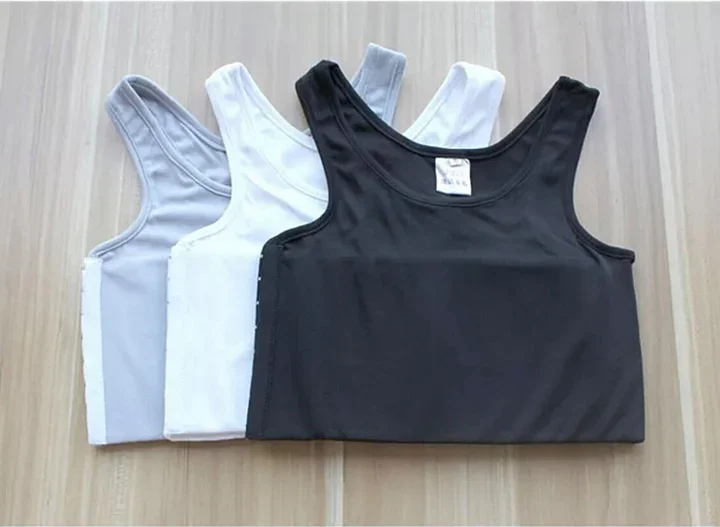
“For a long time, the message to people like us was simple. You were not part of the design process,” says Robyn Electra from Bond and Binder, a body-inclusive underwear brand. “So, you made do. You improvised with whatever was in the drawer. The clothes were never built for your body, and you were expected to be grateful they existed at all.”
It is a useful lens, because it strips the issue back to its mechanics. When a body has been left out of the design process entirely, the failures are not subtle. The garment digs in. It rides up. It restricts movement, or it simply does not hold. You feel, very concretely, that you were an afterthought rather than a customer.
The experience is sharper for some wearers than others, but the underlying problem is the same one the plus-size shopper meets on the high street. The clothes were drawn for someone else.
The Work Happens at the Cutting Table
What the better makers have worked out is unglamorous and largely invisible from the front row. Designing for a range of real bodies is a question of pattern cutting, not marketing. It means understanding how weight sits, where a garment needs room, how proportion shifts across a spectrum of frames rather than along a single straight line. It is slow, technical work, and it does not photograph well. Which is precisely why so much of the industry prefers the easier version, the one that announces inclusion without doing the construction.
There is a cost to the easier version, and it is not only borne by the people left out. A garment that fits badly gets returned, worn once, or never worn. A shopper who has been disappointed enough times stops looking. The supposed efficiency of designing for one body and stretching it to cover the rest turns out to be a slow leak, a steady loss of people who would happily have bought clothes that fit them.
None of this requires the industry to abandon what it knows. The craft already exists. The same care a tailor brings to a made-to-measure piece, the attention to fit and form and construction, is what ready-to-wear withholds from anyone outside the sample range. It is not a question of capability. It is a question of where that capability gets pointed, and who is judged worth pointing it at.
That is the harder, quieter work the next few seasons will be measured against. Not the casting, welcome as a broader runway is, but the pattern itself. Whether brands are willing to start from a wider set of bodies rather than retrofit a narrow one, and whether they treat fit for everyone as a baseline rather than a gesture.
The advocates who have pushed hardest on this tend to frame it as a question of will rather than skill. “This is a movement, not a moment. And it involves all of us,” says writer and accessibility advocate Sinéad Burke, who has spent years asking the industry a deceptively simple question about who is not in the room when a garment is designed. The work is collective, and it is ongoing, and it does not end when the cameras leave.
Who Counts as a Customer
Because a body on the runway is a photograph. A garment that fits is a decision, made early, at the cutting table, about who counts as a customer. Fashion has spent a long time talking as though that decision has already been made.
It has not. It is still being made, one pattern at a time, and most of the room is still waiting to be included in it.