Backstage, just hours before a show, the mood begins to shift. A look that once felt complete suddenly seems slightly off. A neckline needs something more. A silhouette feels unfinished. Then a single piece of jewelry is placed, and everything clicks into place. Behind moments like these, UVARA Jewelry manufacturer, a leading custom jewelry supplier, is part of the broader process that helps bring early ideas into something wearable.
Designers continue refining their looks while stylists make quick adjustments, but another process has already been unfolding in the background. Sketches have been reviewed, materials selected, and prototypes tested, all leading up to this final moment.
Getting from sketch to runway is never just about design. It comes down to choosing the right material and making sure it performs when it matters most.
The First Step: Designing with the End Look in Mind
Every piece begins as an idea, but rarely as a finished one. A designer might start with a rough sketch, already imagining how the jewelry will move with the body, how it will sit against fabric, and how it will frame the overall look.
It is not only about creating something visually appealing on paper. The piece has to belong within the outfit. A bold earring might stand out in a drawing, but if it feels too heavy or throws off balance, it will not last long in a fitting.
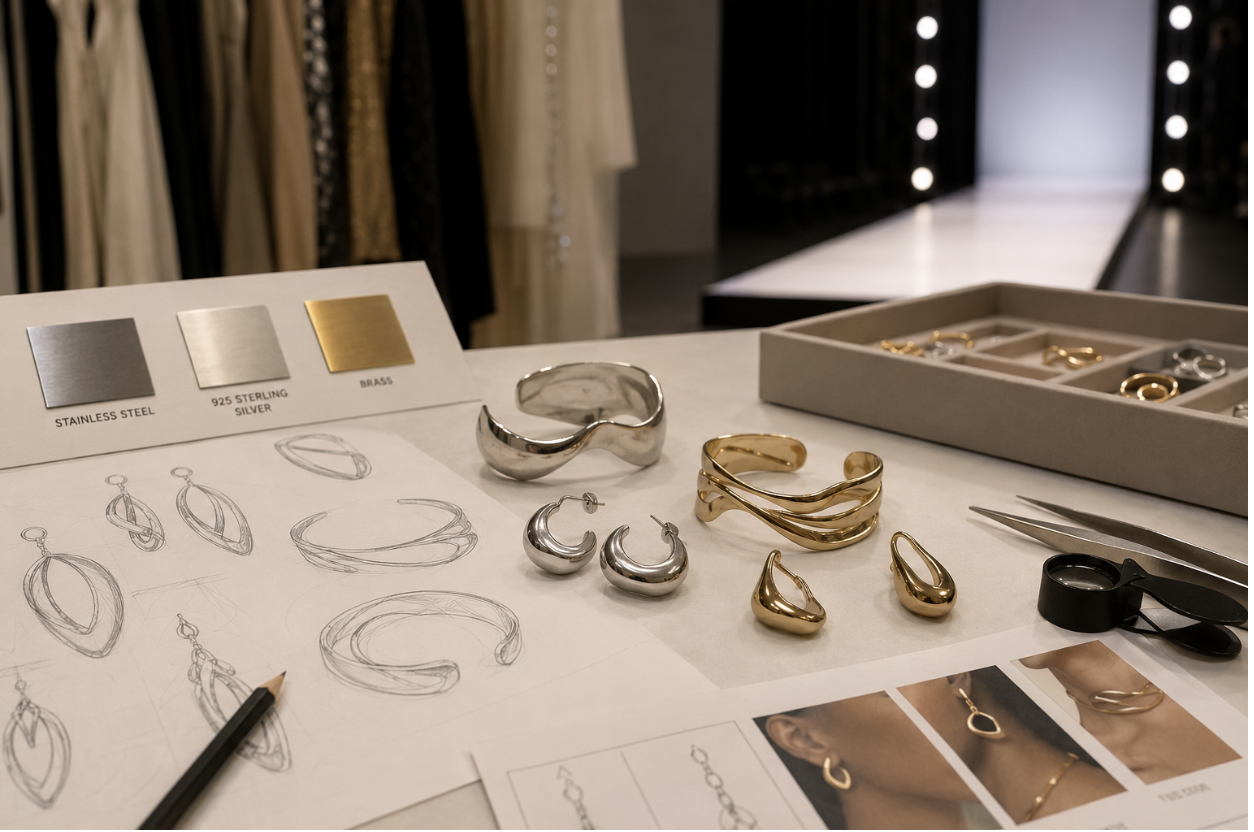
These decisions begin shaping the design early. Material choices often come into play sooner than expected. A structured concept may call for stainless steel, while something more delicate may lean toward sterling silver. Even at this stage, the direction of the final custom jewelry piece is already taking form.
Choosing the Right Metal for the Vision
As the design becomes clearer, the choice of metal starts to guide what is possible. It is often less about preference and more about what the piece needs to do.
For designs that rely on structure, stainless steel becomes a natural option. It holds its shape well, allowing bold pieces to maintain clean lines from concept to final wear. It also offers durability, which is important when pieces are expected to be worn beyond a single event.
When the focus shifts to finer detail, 925 sterling silver tends to come into play. It allows for more precision and a smoother finish, making it easier to achieve a refined look without losing flexibility in design.
Brass offers a different kind of versatility. It works well for trend-driven styles, especially when a warm, gold-tone finish is part of the vision. For larger collections, it also allows more room to experiment while staying within a practical range.
From Prototype to Production: Making Ideas Wearable
The first prototype rarely gets everything right. What looks balanced in a sketch can feel completely different when it is held or worn. A piece might be heavier than expected, or a surface may not reflect light the way it was imagined.
That is where adjustments begin. Sizes are refined, weight is redistributed, and small details are reworked. It often takes several iterations before everything feels right.
This stage is where the realities of working with a jewelry manufacturer become clear. Different materials respond in different ways. Some allow quicker modifications, while others require more careful handling, which can affect timelines.
In many cases, manufacturers such as UVARA Jewelry become part of this iterative process, helping refine pieces so they move closer to the original vision.
Bringing a design into production is not always a straight path. It is a process of refining, testing, and gradually shaping the piece into something that works as well in reality as it does in concept.
Timing, Scale, and the Reality of Fashion Deadlines
As the show approaches, the pace naturally picks up. What once felt like a steady process turns into a series of tighter timelines, where every step needs to move forward without delay.
Designers are rarely working with just one piece. Multiple versions need to be produced, each consistent in size, finish, and quality. Under runway lighting, even the smallest variation can stand out.
At this stage, production needs to be steady and reliable. When timelines are fixed, having the right support behind the scenes helps keep everything aligned without drawing attention away from the creative work.
Getting everything ready on time is not just about logistics. It is part of making sure the original vision is delivered exactly as intended.
Final Touch: Styling Jewelry for the Runway
When everything begins to come together, the final decisions happen quickly. Stylists adjust pieces, test different options, and fine-tune how each look is presented.
Jewelry needs to respond to movement, catch light at the right moment, and sit naturally with the outfit. Nothing can feel out of place.
Often, it is these subtle details that make the difference, turning a complete look into something that feels polished the moment it reaches the runway.
Conclusion: Where Craft Meets Creative Vision
By the time a piece reaches the runway, it reflects more than just design. It carries the result of careful decisions, collaboration, and execution behind the scenes.
That process often involves experienced partners who understand both the creative and technical sides of production, including teams like UVARA Jewelry. As materials continue to evolve, they open new possibilities for how jewelry is created, worn, and experienced.