The most interesting shift in luxury fashion right now has nothing to do with what is new. It has everything to do with what already exists.
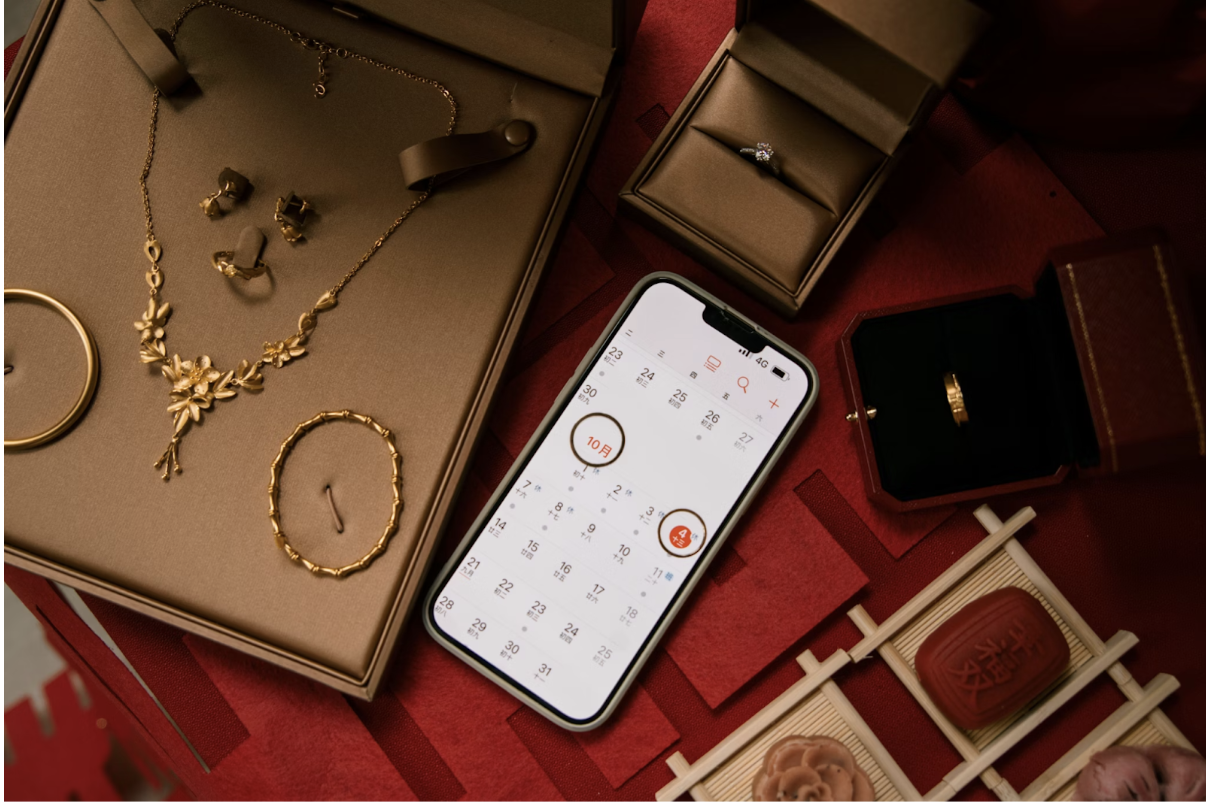
Across runways, editorial shoots and private collections, pre-owned fine jewellery is claiming a place it has never held before. Vintage engagement rings are appearing on red carpets. Archival Cartier is showing up in street-style photography. Second-hand diamonds are being styled alongside contemporary couture.
This is not a niche trend driven by budget constraints. It is a cultural reorientation. A generation of luxury buyers is redefining what value means, and the answer increasingly points backward, toward provenance, craftsmanship and the quiet prestige of a piece with a story.
Sustainability plays a role. So does investment thinking. But beneath both is something more fundamental: a rejection of disposability in favour of permanence. In an industry built on seasonal cycles, that instinct is quietly radical.
Why Fine Jewellery Leads the Resale Movement
Luxury resale spans handbags, watches, fashion and footwear. But jewellery occupies a singular position. Its materials do not degrade. Its craftsmanship does not date. Its emotional resonance deepens rather than fades.
Gold and platinum carry intrinsic value that exists independently of any brand. A well-cut diamond retains its optical performance indefinitely. These are not depreciating assets. They are stores of value in physical form.
When heritage branding is layered on top of material worth, the equation strengthens further. A Bulgari Serpenti bracelet or a Van Cleef Alhambra pendant carries recognition that transcends geography and generation. The design is the brand, and the brand is the value.
Craftsmanship longevity reinforces this. A hand-set pavé surface from the 1960s often exhibits a level of precision that matches or exceeds contemporary production. The artisans who created these pieces operated within traditions that prized patience over efficiency.
Emotional value adds the final layer. Jewellery marks engagements, milestones, inheritances and personal reinventions. A piece that has already lived through one significant moment carries a weight that new inventory simply cannot replicate.
This convergence of material, brand, craft and sentiment is why jewellery consistently outperforms other categories in the secondary luxury market.
The Modern Engagement Ring Market
Nowhere is the pre-owned luxury shift more visible than in bridal jewellery. The engagement ring market is being reshaped by buyers who think differently about sourcing, design and what a ring should represent.
Ethical sourcing is a primary driver. Growing awareness of mining practices and supply chain opacity has made many buyers cautious about newly extracted diamonds. A pre-owned stone sidesteps those concerns entirely, carrying no additional environmental footprint.
Rising diamond prices have also shifted behaviour. The cost of a new solitaire from a recognised house has climbed steadily. Buyers who want quality without the retail premium are discovering that the secondary market offers exceptional value.
Vintage-inspired designs are simultaneously surging in popularity. Art Deco settings, Edwardian filigree and mid-century bezel mounts are appearing in bridal editorials with increasing frequency. Buyers are drawn to the character and individuality these older settings offer.
This has created a growing market for authenticated pre-owned bridal pieces. Platforms offering used engagement rings for sale provide access to verified vintage and second-hand rings with professional grading and certification. For buyers seeking something distinctive, these channels offer what a standard retail showroom often cannot.
The cultural narrative around engagement rings is evolving alongside this. The expectation of a brand-new stone from a specific retailer is loosening. In its place is a more personal and considered approach where the ring’s history becomes part of its appeal.
Bridal stylists are responding accordingly. Editorial spreads now feature mixed-era stacking, where a vintage solitaire sits alongside a contemporary band. The look is intentional, layered and individual.
Sustainability as a Style Statement
The environmental case for pre-owned luxury is well documented. Mining, refining and manufacturing new jewellery carries a substantial ecological footprint. Every piece that circulates through the secondary market avoids that impact entirely.
But sustainability in fashion has moved beyond environmental accounting. It has become an aesthetic position. Choosing pre-owned signals a set of values that younger luxury consumers actively want to project.
Circular fashion, once associated primarily with clothing, now extends into fine jewellery and accessories. The principle is the same: extend the lifecycle of beautifully made objects rather than replacing them with new production.
Understanding the growing trend of sustainability across the fashion industry provides context for why this shift has accelerated. Consumers are applying the same critical lens to their jewellery boxes that they already apply to their wardrobes.
The investment dimension strengthens the proposition. A buyer who acquires a pre-owned heritage piece at a fair secondary price holds an asset that is likely to maintain or appreciate in value. Sustainability and financial intelligence align.
Brands are acknowledging this reality. Certified pre-owned programmes and partnerships with authenticated resale platforms are emerging across the luxury sector. The signal is unmistakable: the secondary market now reinforces brand equity rather than diluting it.
What Designers and Stylists Are Watching
The influence of pre-owned jewellery extends beyond the consumer market and into the creative direction of new collections. Designers are studying archival pieces not just for inspiration but as competitive benchmarks.
Retro revival is one of the defining aesthetic movements in current jewellery design. Houses are reissuing vintage silhouettes, revisiting discontinued collections and drawing explicitly from their own archives. The secondary market has made these reference points visible and desirable again.
Archival aesthetics are also shaping editorial styling. Fashion editors are increasingly sourcing vintage jewellery for shoots, mixing decades and houses in combinations that feel curated rather than coordinated. The effect is personal and layered.
Personalised jewellery styling has gained momentum alongside this. Clients are working with stylists to build collections that span eras rather than sticking to a single brand or period. A 1970s cocktail ring paired with a contemporary chain creates a narrative that a single-house collection cannot.
This cross-era approach reflects a broader cultural appetite for individuality. In a market saturated with identical new releases, a vintage piece becomes a point of distinction. It says something about the wearer that a current-season purchase does not.
Nowhere is that more pronounced than in the growing interest in coloured stones; buyers who choose to browse pink diamond engagement rings in Melbourne are responding to the same instinct, seeking finite provenance and a visual identity that mass-market retail simply cannot offer.
The stylists and creative directors who understand this are shaping the next chapter of luxury presentation. Their work signals that the most compelling jewellery stories are not always the newest ones.
Redefining Modern Luxury
The rise of pre-owned fine jewellery is not a reaction against luxury. It is a refinement of it. The market has evolved beyond equating value with newness and toward a more nuanced understanding of worth.
A vintage engagement ring carries provenance. A pre-owned Cartier piece carries heritage. A second-hand diamond carries the same brilliance it held the day it was cut. Nothing has been lost. Something has been gained.
For the modern luxury consumer, sophistication means choosing with intention. It means understanding that a piece with history is not diminished by previous ownership but enriched by it.
The secondary market is not a detour from luxury. It is luxury, reconsidered and matured.