1. Fashion Brands Can’t Rely on Apparel Alone Anymore
For emerging fashion brands, apparel used to be the main growth driver. But today’s retail environment is more demanding. Margins are tightening, production costs are rising, and discount cycles are becoming more aggressive. At the same time, multi-size inventory adds pressure. As Ciffnoo Lifestyle Bag Company, a reliable Chinese manufacturer, has seen across different markets, brands are actively looking for ways to reduce complexity and protect profit.
Every additional size increases forecasting risk, and returns due to fit can quietly reduce profitability. Because of this, many brands are rethinking their structure. Instead of depending only on clothing sales, they are expanding into complementary categories that are easier to manage and more predictable.
Lifestyle products, especially bags, offer that balance. They avoid size-related complexity, generally see lower return rates, and often encourage repeat purchases. This is not a passing trend. It reflects a broader strategic shift across modern fashion brands looking for more stable growth.
2. Why Lifestyle Bags Make Business Sense From Day One
Lifestyle bags solve several operational challenges that apparel brands face daily. First, there is no size grading to manage. A cosmetic bag or travel organizer does not require multiple fit rounds or size runs. That immediately simplifies production planning and reduces inventory pressure.
Return rates are also typically lower. With clothing, fit and comfort often lead to exchanges or refunds. Bags are much simpler to manage. If the quality and design meet expectations, customers are far less likely to return them. This is one reason many apparel brands now work closely with experienced cosmetic bags manufacturers to expand their product mix without increasing operational complexity.
From a financial perspective, forecasting becomes clearer. You are working with one SKU per style instead of several sizes per color. That makes demand planning more manageable, especially for emerging brands with limited historical data.
There is also strong perceived value. A well-designed lifestyle bag can retail at healthy margins relative to production cost. Because it pairs naturally with apparel, it is easy to bundle into collections or position as an add-on during launches, increasing overall order value.
3. They Extend Your Brand Without Diluting It
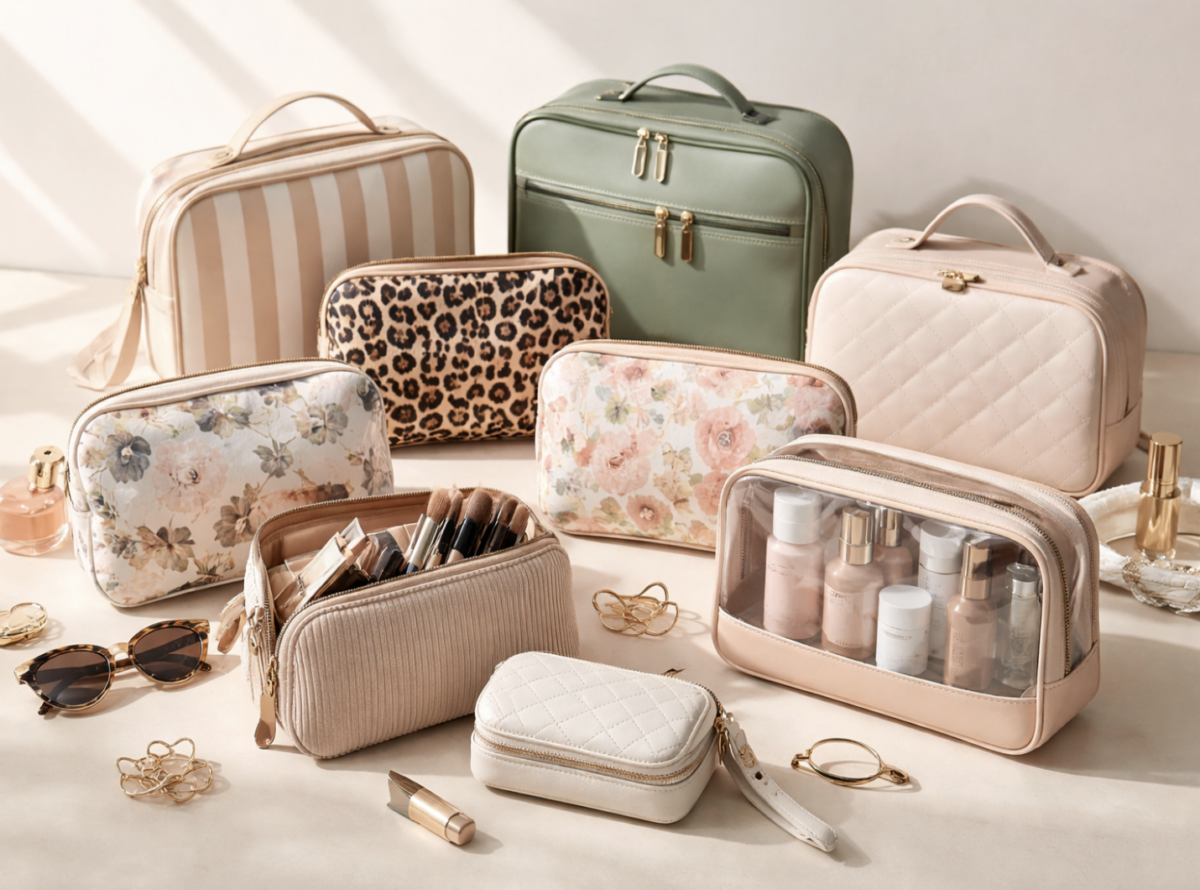
Lifestyle bags feel like a natural extension of a fashion brand, not a departure from it. Makeup bags, travel organizers, wash bags, tote bags, and handbags already exist within the same daily routine as clothing. They support how customers move through their day, whether commuting, traveling, or preparing for events.
These products also allow brands to express identity in new ways. Signature prints, seasonal color palettes, and fabric choices can carry over seamlessly from clothing collections. A tote bag can reflect a relaxed, everyday direction, while a structured handbag communicates something more refined. Both reinforce the brand story rather than distract from it.
Many manufacturers, including Ciffnoo, have observed that brands expanding into lifestyle categories often strengthen their overall brand positioning. This approach shifts a label from being known for a single product category to being recognized as a lifestyle brand. It also strengthens merchandising strategies, supports cross-selling, and introduces giftable price points. The expansion feels intentional and cohesive, not random.
4. Faster to Develop, Easier to Scale
From an operational standpoint, lifestyle bags are often easier to develop than apparel. Sampling cycles tend to move faster because there are no fit revisions or grading adjustments. Once structure and materials are approved, production can progress with fewer revisions.
This speed makes testing new ideas more realistic. Capsule drops, limited seasonal colors, or collaboration pieces can be introduced without the long timelines that clothing often requires. Lower minimum order quantities also give emerging brands space to experiment without overcommitting capital.
Consistency is another advantage. Without sizing variations, maintaining uniform quality across batches becomes more straightforward.
When development and production are aligned early, sample accuracy improves and scaling becomes smoother. Working with an experienced lifestyle bag manufacturer such as Ciffnoo can support this process, helping ensure that what is approved in sampling is what reaches customers at scale.
5. Sustainability Expectations Are Higher and Bags Are Easier to Adapt
Sustainability is no longer optional. Buyers, retailers, and consumers expect transparency around materials and sourcing. For emerging fashion brands, upgrading full apparel supply chains can feel complex and resource-intensive.
Lifestyle bags offer a practical starting point. Switching to recycled fabrics such as RPET, organic cotton, or durable canvas is often simpler than restructuring an entire clothing line. Recycled linings and paper-based packaging can also be introduced without major structural changes.
Because bags do not involve fit adjustments or size runs, material changes from season to season are easier to manage. Brands can test eco-friendly options in smaller batches and scale based on demand.
For labels looking to strengthen their ESG positioning, lifestyle bags provide a realistic and manageable step forward.
6. What Smart Emerging Brands Are Doing Right Now
Emerging brands are no longer waiting years to expand beyond apparel. Many are launching lifestyle bags shortly after runway exposure, using that momentum while attention is still high. Instead of large rollouts, they begin with limited drops to test demand and gather real sales data.
Accessories are also being used to drive repeat purchases. A customer who may not need another dress this season might still invest in a new makeup bag or travel organizer. This keeps engagement active between major collection launches.
Forward-thinking founders are building product ecosystems, not just collections. They are shaping brands that fit into everyday routines from the beginning.
Lifestyle bags are not side products. They are structured growth tools.