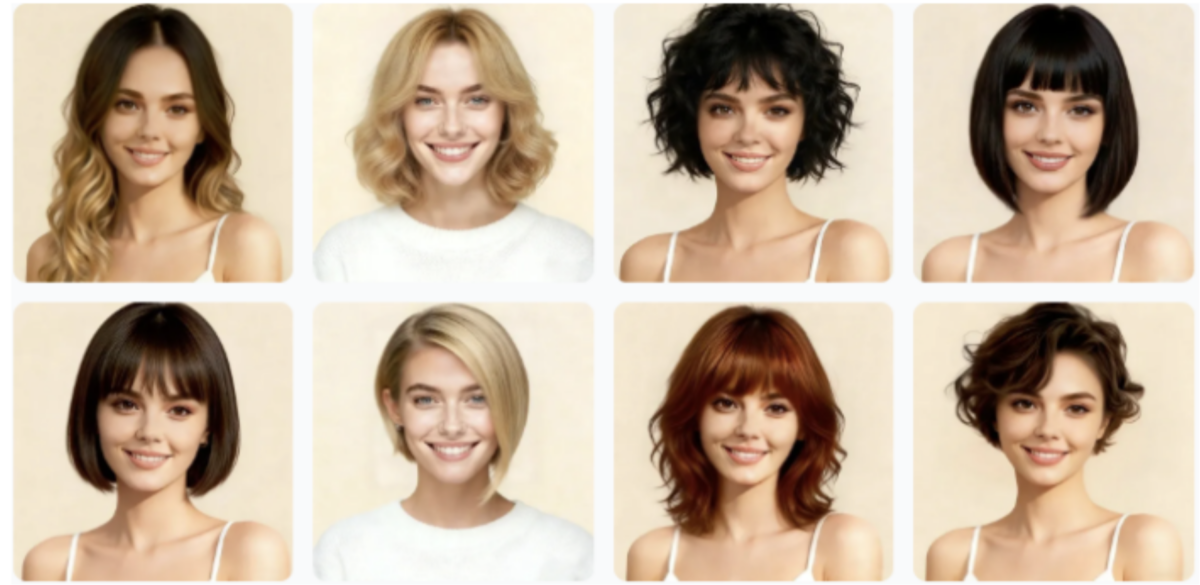
In recent years, the beauty and grooming industry has witnessed a significant technological shift, particularly with the rise of AI-powered tools that simplify personal styling choices. Among these innovations, AI hairstyle try-on platforms have garnered attention for their ability to help users visualize potential haircuts before committing to a real-life change. Platforms like RightHair.ai are at the forefront of this trend, offering a blend of advanced facial analysis and interactive virtual trials.
Industry Trends in AI Hairstyling
Some surveys and platform reports indicate that over 60% of users exploring new hairstyles are hesitant to commit due to fear of an unflattering result. Traditional methods—like flipping through magazines or browsing salon portfolios—often fail to account for personal face shape, hair texture, or the interplay of lighting with hair color. AI hairstyle try-on systems address these gaps by providing dynamic, real-time previews that consider individual facial features and hair characteristics.
Many salons are also incorporating AI tools into their consultations, allowing stylists to demonstrate potential results digitally. This approach reduces guesswork, increases client satisfaction, and streamlines communication between the client and stylist. For users, it means fewer costly mistakes and a more confident approach to change.
Understanding the Decision Scenarios
Users typically explore AI hairstyle try-on under several scenarios:
- Haircutting bangs – Determining whether curtain bangs, blunt cuts, or side-swept styles suit a particular face shape.
- Hair length adjustments – Testing short bob cuts, medium lengths, or long-flowing styles to assess overall balance.
- Hair color changes – Visualizing highlights, balayage, or bold colors without risking permanent alteration.
- Perming options – Experimenting with waves, curls, or texture enhancements.
- Sideburn and fringe modifications – Understanding how minor changes impact facial proportions.
Many users have stated that the ability to preview combinations—like layered cuts with subtle highlights—has been a major factor in their adoption of AI tools.
Target Audience and Customization
AI hairstyle try-on is particularly popular among diverse demographic groups. For example:
- Working professionals and students often seek low-maintenance yet stylish cuts suitable for daily routines.
- Brides, grooms, and wedding parties use AI previews to plan intricate hairstyles for special events.
- Individuals over 40 may focus on styles that enhance volume, cover receding hairlines, or soften facial angles.
- Trend-conscious youth explore bold and experimental cuts, including K-style, 90s/Y2K, or textured messy looks.
These platforms typically allow users to filter options based on hair texture—fine, coarse, curly, frizzy, or naturally wavy—and maintenance levels. For example, some styles may require daily styling of 0–5 minutes, while others need monthly salon visits to maintain layers or bangs.
Incorporating Face Features
A critical factor in hairstyle selection is facial analysis. Users with high cheekbones, strong jawlines, or prominent foreheads can benefit from styles that balance proportions. For instance:
- Round faces often pair well with layered or textured cuts that elongate the appearance.
- Square faces may suit soft waves or curtain bangs to soften jaw angles.
- Long faces can benefit from fringe styles or medium-length layers to create symmetry.
The integration of AI-powered face shape analysis for haircuts allows the platform to suggest styles that align with each individual’s unique features. Some users appreciate seeing three perspectives—front, side, and back—to ensure comprehensive visualization before making decisions.
Hairstyle Classification
AI tools categorize hairstyles by various dimensions to improve user experience:
- Face shape – Round, oval, square, heart, and long.
- Hair volume – Thin, medium, or thick.
- Hair texture – Straight, wavy, curly, or frizzy.
- Occasion – Casual, formal, wedding, seasonal themes.
- Age group – Teen, adult, or senior styles.
This classification allows users to filter and compare multiple options efficiently. Some users report that being able to contrast two or three styles side-by-side dramatically aids in decision-making.
Styling Techniques and Hair Care Tips
While AI cannot replace hands-on styling, it can guide users in preparation. Many platforms provide tips on:
- Shooting techniques – Lighting consistency, clear hair visibility, and camera angles to ensure accurate previews.
- Hair preparation – Brushing, slight styling, or minimal product use to showcase natural texture.
- Step-by-step upload guidance – Ensuring the AI receives high-quality data to deliver precise simulations.
Additionally, users can explore maintenance strategies based on selected hairstyles, learning which styles require minimal daily effort versus regular trims.
Trial Wearing Methodology
Effective AI trials often use a structured methodology to provide reliable insights. Some platforms recommend:
- A/B testing – Trying two versions of the same haircut, for instance, a layered cut versus a blunt bob.
- Saving for review – Revisiting trial images the next day to assess suitability under different lighting or moods.
- Three-perspective evaluation – Reviewing front, side, and back views for a holistic assessment.
- Data security considerations – Ensuring images are securely stored or deleted after use.
This structured approach ensures users make informed decisions and can communicate preferences clearly to their stylist.
Communicating with Stylists
Once a preferred style is selected, translating the virtual trial into actionable instructions is key. Users should be prepared to discuss:
- Hair length adjustments in centimeters or inches.
- Layering or thinning techniques.
- Bang or fringe style specifics.
- Sideburn, contouring, or face-framing adjustments.
- Color shades and highlights relative to natural tones.
Clear communication ensures the stylist understands the desired effect and reduces the risk of misinterpretation.
Comparing Hairstyles
Many users have found side-by-side comparisons particularly valuable. AI tools allow for overlay features, where different cuts or colors can be visualized on the same facial image. This method provides immediate insight into which style best complements facial features, personal style, or event requirements.
Seasonal and Event-Based Considerations
AI hairstyle try-on can also help plan for seasonal changes or special occasions:
- Interview season – Styles emphasizing neatness and professionalism.
- Graduation season – Medium-length, easy-to-maintain cuts suitable for caps and gowns.
- Wedding season – Bridal or guest styles that incorporate volume, waves, or braiding.
- Holiday themes – Experimenting with playful textures, bold colors, or themed cuts.
This forward-looking approach allows users to prepare and visualize hairstyles long before the event occurs.
Conclusion
AI hairstyle try-on has fundamentally transformed how users approach hair transformations. By integrating advanced facial recognition, detailed styling databases, and trial methodologies, platforms like RightHair.ai empower individuals to explore a wide range of looks confidently. From face shape considerations to maintenance levels, these tools offer a comprehensive solution for anyone seeking a change without uncertainty.
As technology continues to evolve, it is likely that AI will play an even larger role in personal grooming, bridging the gap between imagination and reality, and ensuring that every user finds a hairstyle that enhances their unique features and lifestyle. For anyone looking to experiment safely and efficiently, AI hairstyle try-on represents an indispensable tool in modern grooming strategies.