
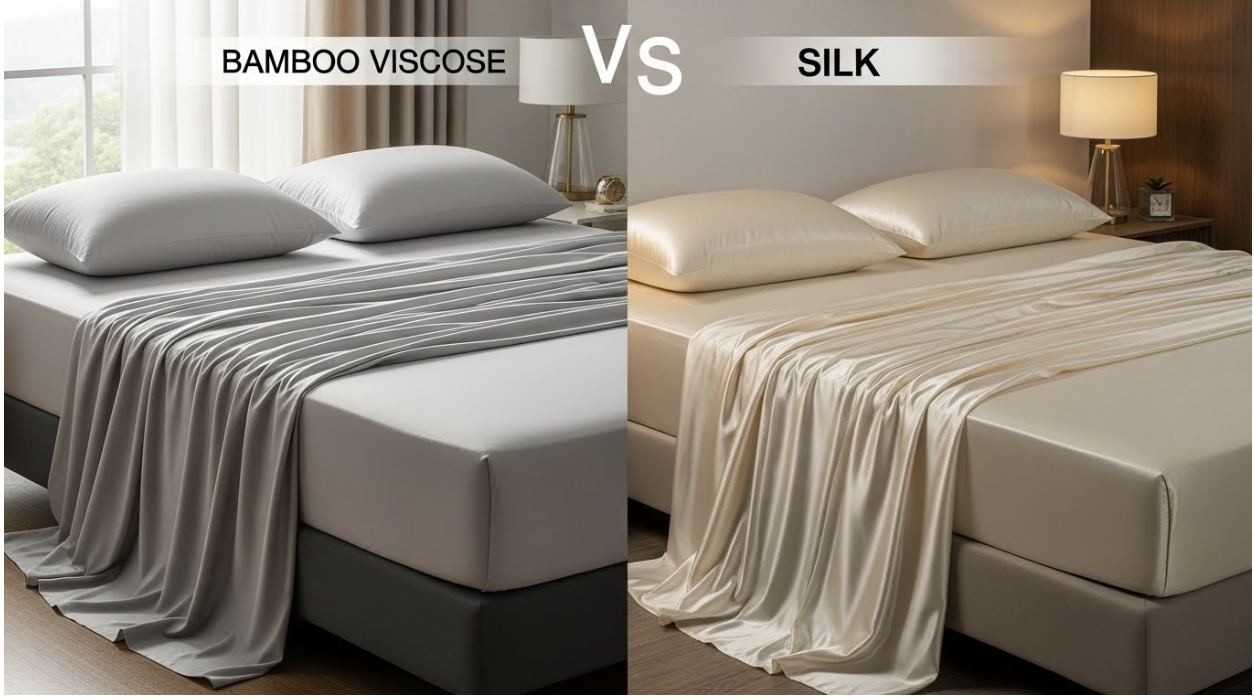
You want better sleep. You know quality bedding matters. But when you start shopping for premium sheets, you hit a decision: bamboo viscose or silk?
Both sound luxurious. Both come from natural fibers. Both are soft. But they’re not the same, and choosing the wrong one for your needs means wasting money on bedding that doesn’t work for your lifestyle.
This guide compares them honestly. We’re not here to sell you one or the other. We’re here to help you understand what each offers so you can make the right choice for your situation.
WHAT IS BAMBOO VISCOSE?
Bamboo viscose is made from bamboo fibers converted into a soft, silky fabric. It’s created through a process that breaks down the bamboo plant and spins it into yarn, similar to how other natural fibers are processed.
The result is an incredibly soft fabric that feels luxurious without the luxury price tag.
Why bamboo viscose is affordable:
Bamboo is a grass that grows at an astounding rate. Some species grow 35 inches in a single day. Harvesting is quick and efficient. Compare this to silk, which requires thousands of silkworm cocoons, each spun by hand. It’s no wonder bamboo viscose costs less.
Key benefits of bamboo viscose:
- Luxury feel without luxury pricing
- Easy to care for, just machine wash and dry
- Breathable and moisture-wicking
- Excellent for hot sleepers
- Durable and long-lasting
- Minimal fading or yellowing even after multiple washes
- Works year-round due to thermoregulating properties
The practical qualities of bamboo viscose make it an excellent choice for people who want quality without complications.
WHAT IS SILK?
Silk is one of the world’s most luxurious fabrics. It’s been coveted by royals for centuries. The smooth, plush texture is legendary. It’s made from silkworm cocoons, over 12,000 cocoons are required to make a single silk comforter.
Why silk is expensive:
The labor-intensive process of harvesting and spinning silk adds up. You’re paying for luxury that’s been prized for thousands of years.
Key benefits of silk:
- Undeniably luxurious and sophisticated
- Extraordinarily smooth texture
- Strong and durable despite delicate feel
- Naturally hypoallergenic
- Beautiful aesthetic that elevates décor
Silk bedding makes a statement. It says you’ve invested in the finest. And for people who value that aesthetic and feel, it’s worth the premium.
THE SOFTNESS COMPARISON
Both are incredibly soft. But there’s a difference.
Bamboo viscose is smooth and soft. It feels luxurious. It’s exceptionally comfortable against your skin.
Silk is smoother, almost slippery. Some people love this ultra-smooth feel. Others find it too slippery. Silk sheets can cause you to slide around, which some sleepers find uncomfortable.
Interestingly, many people actually prefer bamboo viscose for this reason. It’s soft without being so slippery that you slide around in bed. It’s the “Goldilocks” of luxury fabrics, smooth enough to feel premium but not so smooth that it causes problems.
BREATHABILITY AND TEMPERATURE REGULATION
This is where bamboo viscose has a significant advantage.
Bamboo viscose is naturally breathable. Its micro-porous structure allows air to circulate freely, making it excellent for hot sleepers. It’s also moisture-wicking, so sweat moves away from your body instead of getting trapped.
Silk has a tighter weave. While it’s not bad for breathability, it’s less breathable than bamboo viscose. This makes silk a better choice for people who get cold at night. If you tend to run hot, bamboo viscose is the superior choice.
If temperature regulation matters to you, whether you’re a hot sleeper, experience hot flashes, or just want year-round comfort, bamboo viscose is your answer.
DURABILITY: ARE THEY BOTH BUILT TO LAST?
Yes. Both bamboo viscose and silk are durable fabrics that should last for years.
The difference is what happens along the way.
Bamboo viscose maintains its appearance through multiple washings. Even after years of regular use, it still looks new. It resists fading and yellowing.
Silk can yellow over time, especially if exposed to sunlight or not cared for perfectly. While it’s still durable, it requires more careful handling to maintain its appearance.
CARE AND MAINTENANCE: THE BIG DIFFERENCE
Here’s where the comparison gets practical, and where most people notice the real difference between these fabrics.
Bamboo viscose:
- Machine wash in warm or cool water
- Mild detergent
- Tumble dry on low or air dry
- Minimal effort
- Can withstand regular washing without damage
- Great for busy people
Silk:
- Hand wash or delicate cycle in cold water only
- Gentle detergent (specialized silk detergent recommended)
- Air dry only (never put in dryer)
- High maintenance
- Requires careful handling
- Better for people with time and patience for detailed care
This is the biggest practical difference. If you have a busy life and want quality bedding that doesn’t require special treatment, bamboo viscose wins. If you enjoy caring for delicate items and don’t mind the extra steps, silk can work.
COST COMPARISON
Bamboo viscose typically costs $100-$200 for a quality sheet set.
Silk typically costs $300-$1,000+ depending on the grade and quality.
You’re paying roughly three to five times more for silk than for bamboo viscose. That’s a significant difference.
Ask yourself: Is the additional softness and luxury aesthetic worth three to five times the price? For some people, absolutely. For others, bamboo viscose offers incredible value.
WHICH FABRIC IS BEST FOR DIFFERENT SITUATIONS?
Choose bamboo viscose if you:
- Want luxury at an affordable price
- Run hot or experience hot flashes
- Don’t want to worry about special washing
- Want bedding that maintains its appearance over time
- Have a busy lifestyle
- Want sheets that work year-round
- Want thermoregulating fabric
Choose silk if you:
- Want the ultimate luxury experience
- Don’t run hot at night
- Don’t mind hand-washing delicate items
- Love the ultra-smooth, slippery feel
- Want to make a style statement with your bedding
- Have the time to care for high-maintenance linens
REAL-WORLD EXPERIENCE
Here’s something important: many people who expect to love silk actually prefer bamboo viscose after trying both.
The ultra-slippery feel of silk, while luxurious, can be impractical for actual sleeping. If you’re constantly sliding around or sheets keep slipping, that affects sleep quality. Bamboo viscose offers that luxury feel without the practical problems.
Additionally, if you’re someone who needs easy-care bedding but still wants quality, bamboo viscose delivers on both fronts. You get luxury comfort without the maintenance headache.
CREATING YOUR IDEAL SLEEP SETUP
Whether you choose bamboo viscose or silk, pair it with complementary bedding for optimal comfort.
If you go with bamboo viscose sheets, consider pairing them with bamboo jersey sheets for variety. The jersey knit construction offers a slightly different feel while maintaining all the same breathability and moisture-wicking benefits.
For those who appreciate luxury linens in different forms, bath sheets towels in the same fabric create a cohesive sleep and bath experience. Your entire bedroom environment feels intentional and coordinated.
Creating a luxury sleep environment doesn’t require choosing just one fabric. You can layer different high-quality options based on season, mood, or preference. The key is selecting fabrics that actually work for how you sleep.
THE DECISION IS PERSONAL
There’s no universal “best” choice between bamboo viscose and silk. The right choice depends on your lifestyle, preferences, and priorities.
If luxury at an affordable price with minimal maintenance matters to you, bamboo viscose is the clear winner. If you’re willing to pay more for the ultimate luxury experience and don’t mind careful care, silk delivers that.
Many people find their “best” option is actually a combination. Bamboo viscose sheets for everyday use and silk for special occasions. Or vice versa.
See Cozy Earth for both options and choose what works best for your sleep needs. The team can help you understand which fabric aligns with your lifestyle and preferences.
THE BOTTOM LINE
Both bamboo viscose and silk are excellent premium bedding options. Neither is objectively “better”, they’re just different.
Bamboo viscose offers incredible quality at an accessible price with easy care. It’s ideal for people who want luxury without complexity.
Silk offers ultimate luxury and a legendary feel. It’s ideal for people who want the finest and will care for it properly.
Consider your budget, your lifestyle, your temperature preferences, and your maintenance tolerance. Then choose the fabric that fits your real life, not the lifestyle you wish you had.
Quality sleep comes from bedding you actually enjoy using. Whether that’s bamboo viscose or silk, investing in natural, premium fabrics is investing in your comfort and your health.
FREQUENTLY ASKED QUESTIONS
Q: Will bamboo viscose sheets feel as good as silk?
A: They feel different, not worse. Bamboo viscose is soft and smooth without being slippery. Many people prefer this balanced feel over silk’s ultra-slippery texture.
Q: Can silk go in the washing machine?
A: Not really. Even a delicate cycle can damage silk. Hand washing or professional cleaning is safest. Some people machine wash on delicate with cold water, but it’s risky.
Q: Which is better for hot sleepers?
A: Bamboo viscose. Its breathability and moisture-wicking make it superior for temperature regulation.
Q: Does silk stay softer longer than bamboo viscose?
A: Both maintain their softness over years. Silk may yellow slightly over time, while bamboo viscose resists color changes.
Q: Is silk hypoallergenic?
A: Yes, silk is naturally hypoallergenic. Bamboo viscose is also hypoallergenic, so both are good for sensitive skin.
Q: Can I machine wash bamboo viscose?
A: Yes, in warm or cool water on a normal or gentle cycle. It’s much more forgiving than silk.
Q: Which costs more long-term?
A: Silk, because if something goes wrong with care, replacement costs are much higher. Bamboo viscose is more budget-friendly if accidents happen.
Q: Do both fabrics last the same amount of time?
A: Yes, both should last 5-10+ years with proper care. The difference is that bamboo viscose is easier to maintain that care.