I noticed the shift during a runway show three seasons ago.
A model walked past in a chunky knit sweater that looked nothing like the mass-produced pieces hanging in department stores. The stitches were deliberately uneven. The texture was complex and clearly handworked. The audience leaned forward collectively, drawn to something that felt different from the polished perfection we had grown accustomed to seeing.
That moment crystallized something I had been sensing for years. Fashion was turning back toward the handmade. Toward craft. Toward the human touch that industrial production had nearly erased.
The Pendulum Swings Back
Fashion has always moved in cycles.
We spent decades celebrating technology and speed. Fast fashion promised new styles every week. Digital printing allowed infinite patterns without artisan involvement. The industry optimized for efficiency and volume, pushing traditional craftspeople to the margins.
But something was lost in that acceleration. The garments felt interchangeable. The connection between maker and wearer dissolved entirely. Clothing became disposable in both construction and sentiment.
I watched younger designers begin questioning this trajectory. They visited textile archives and studied historical techniques. They sought out artisans who still practiced methods that predated industrial manufacturing. Their collections started featuring pieces that took weeks rather than hours to produce.
The market responded with unexpected enthusiasm. Consumers who had grown weary of sameness were suddenly willing to pay premium prices for garments that carried evidence of human hands.
Understanding the Appeal
The attraction to handcraft runs deeper than aesthetics.
I believe it connects to a broader cultural hunger for authenticity. We live surrounded by screens and algorithms. Our interactions are increasingly mediated by technology. In this context, objects made by human hands carry emotional weight that machine-produced items cannot replicate.
A hand-knit garment tells a story. The slight variations in tension reveal the maker’s rhythm. The choice of materials reflects deliberate decisions rather than automated processes. Wearing such a piece feels like participating in a tradition that stretches back centuries.
This emotional dimension has not escaped the attention of major fashion houses. Brands that once outsourced everything are now investing in artisan workshops. Some have acquired traditional craft businesses to preserve techniques that were disappearing. Others have hired master craftspeople to train new generations.
The economics remain challenging. Handcraft cannot compete with industrial production on price or volume. But it occupies a different category entirely. It offers something that speed and scale cannot provide.
Knitwear’s Particular Moment
Among textile crafts, knitting has experienced perhaps the most dramatic rehabilitation.
For decades, knitwear carried associations with domesticity and amateurism. Handknits were things grandmothers made, not objects of fashion desire. The craft survived in hobby circles while disappearing from serious design consideration.
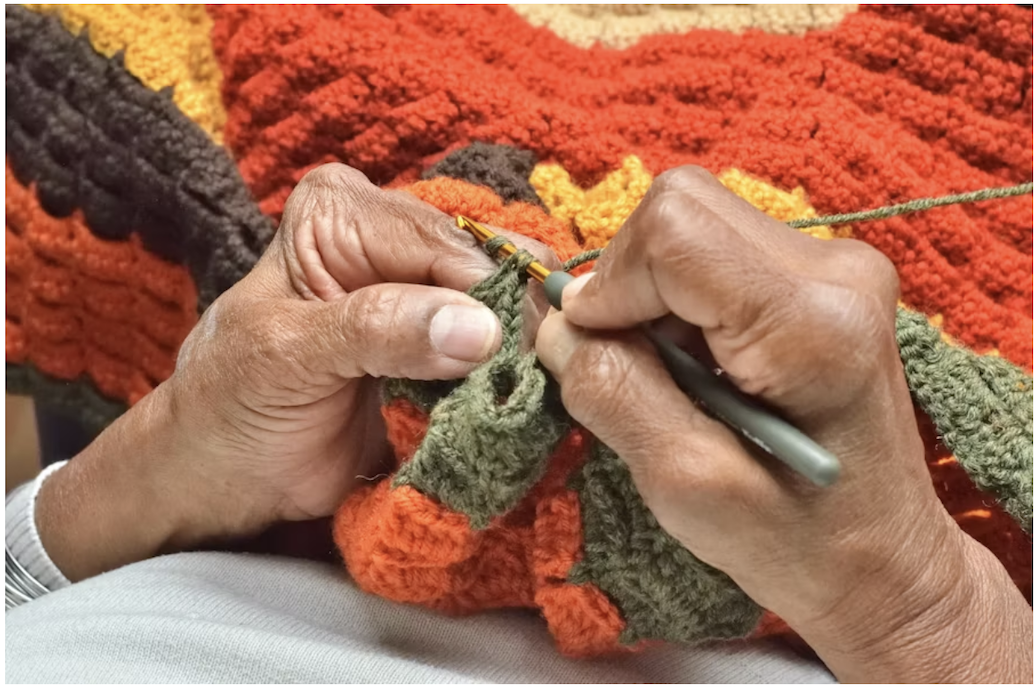
That perception has shifted remarkably. Contemporary designers now celebrate knitting’s unique capabilities. The structure of knit fabric allows three-dimensional shaping impossible with woven textiles. Complex textures emerge from combinations of stitches that have existed for generations but feel fresh in new contexts.
I have visited studios where designers experiment with different knitting yarns to achieve specific effects. The weight and fiber content of yarn determines how a finished garment drapes and moves. Understanding these relationships requires knowledge that cannot be shortcut.
Some designers work entirely by hand. Others combine hand techniques with machine knitting, using technology to execute visions that remain rooted in craft principles. The boundaries between categories have become productively blurred.
What Runways Are Showing
Recent collections across fashion capitals have featured remarkable knitwear.
In Paris, I watched models in sculptural knit pieces that defied expectations about what the technique could achieve. The garments had architectural presence, standing away from the body in shapes that seemed to contradict the softness of their materials.
Milan showed a different approach. Italian houses emphasized the luxury of fine gauge knitting, producing pieces so delicate they resembled woven silk. The craftsmanship was nearly invisible, revealing itself only through the perfect drape and movement of the fabric.
New York designers explored knitting’s potential for bold graphic expression. Intarsia techniques created complex patterns without the heaviness of printed or embroidered alternatives. The images were literally constructed from the fabric itself.
London, characteristically, pushed boundaries furthest. Emerging designers presented deconstructed knitwear that questioned the conventions of finished garments. Deliberate holes and unraveling edges challenged notions of completeness and perfection.
The Sustainability Connection
Handcraft aligns naturally with growing concerns about fashion’s environmental impact.
Garments made slowly and carefully tend to be kept longer. The investment of time and skill discourages casual disposal. Owners develop relationships with pieces that required genuine effort to create.
Natural fibers used in traditional knitting often carry smaller environmental footprints than synthetic alternatives. Wool and plant-based yarns biodegrade at end of life. Their production, while not without impact, generally involves fewer petrochemicals than plastic-derived materials.
I have noticed consumers increasingly asking questions about how their clothing was made. They want to understand the journey from raw material to finished garment. Handcraft provides answers that industrial production often cannot.
This transparency matters beyond environmental considerations. It reconnects clothing to human labor in ways that fast fashion deliberately obscures. When you know something was made by skilled hands, you understand its value differently.
Challenges and Contradictions
The revival of handcraft in fashion is not without complications.
Scalability remains an inherent tension. Genuine handwork cannot meet mass market demand. This creates a dynamic where handcraft becomes exclusive by nature, accessible primarily to those who can afford premium prices.
Some brands have responded by creating hybrid approaches. Limited handcrafted pieces anchor collections while machine-made items extend the aesthetic to broader audiences. Whether this dilutes the meaning of craft or democratizes its influence depends on perspective.
There is also a risk of appropriation without understanding. Surface-level adoption of craft aesthetics, divorced from the knowledge and tradition behind them, reduces handwork to mere styling choice. The difference between genuine craft and its imitation may not be visible in photographs, but it exists.
I remain cautiously optimistic despite these concerns. The renewed attention to handcraft has created opportunities for skilled artisans who previously struggled to find markets for their work. Traditional techniques are being documented and taught with new urgency. Young people are choosing craft careers in numbers not seen for generations.
Where This Leads
Fashion’s relationship with handcraft will continue evolving.
I do not expect handmade garments to replace industrial production. The economics and logistics make that impossible. But I do believe craft has reclaimed a permanent place in how we think about clothing and value.
The designers who most interest me are those working to integrate craft principles throughout their practice. Not just featuring occasional handmade pieces, but approaching design with craft sensibility. Considering materials deeply. Respecting the time that quality requires. Valuing the people whose skills make their visions possible.
This orientation produces different kinds of collections. Smaller in scale, perhaps, but richer in meaning. Less concerned with constant novelty, more focused on refinement and evolution. It represents an alternative to the exhausting pace that has defined fashion for too long.
For those of us who love clothing as cultural expression, this shift offers genuine hope. Fashion can be creative and responsible. Beautiful and ethical. Innovative while honoring tradition.
The model in that chunky knit sweater suggested a different future. Three seasons later, that future is arriving.