
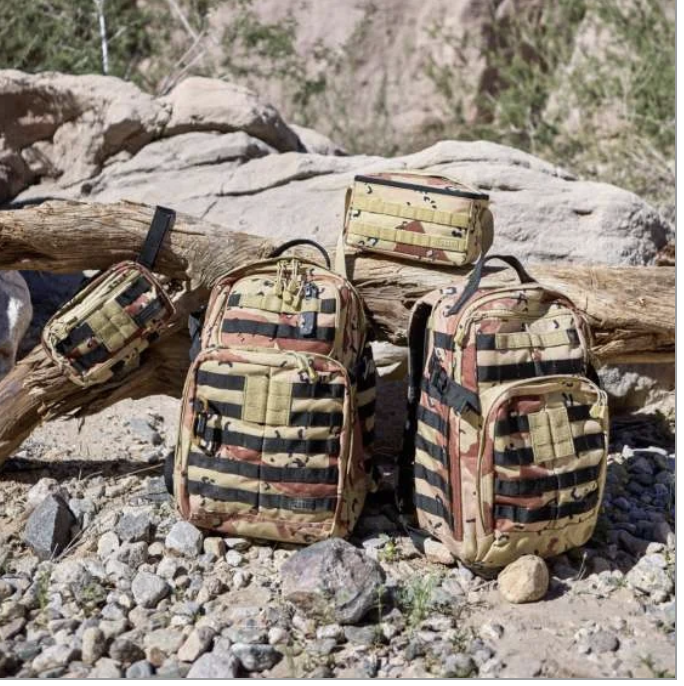
Someone heading out for the day grabs their sling bag out of habit. Keys, phone, wallet. Fine. But then comes the water bottle. The laptop. The rain jacket was stuffed in at the last minute. By the time they leave, the sling strap is digging into one shoulder, the bag is sitting awkwardly at the hip, and nothing is where they expected it to be. These are the 8 items that consistently belong in a backpack instead.
| Item | Why a Backpack Handles It Better |
| Laptop or tablet | Weight sits centered, not pulling on one side |
| Water bottle | Upright in a side pocket, no leak risk from sideways carry |
| Rain jacket or layer | Volume without throwing off the bag’s balance |
| First aid or medical kit | Needs a dedicated compartment, not a shared main pocket |
| Work tools or equipment | Weight distribution matters over long shifts |
| Food and meal prep | Flat base keeps containers stable |
| Camera or fragile gear | Padding and structure protect better than soft sling construction |
| Footwear or a change of clothes | Volume and weight need two shoulder points to be carried properly |
1. Laptop or Tablet
A 13-inch laptop weighs somewhere between 1.2 and 2 kilograms, depending on the model. In a sling bag, that weight sits entirely on one shoulder and one side of the body. Over an hour of walking, that imbalance is noticeable. Over a full day, it causes real fatigue in the shoulder, neck, and lower back.
A backpack distributes that weight across both shoulders and transfers a portion of it to the hips when a sternum or waist strap is used. The laptop sits flat against the back in a padded sleeve, which also protects the screen from knocks that a sling bag’s soft construction cannot absorb.
2. Full-Size Water Bottle
A 750ml or 1-liter water bottle in a sling bag sits at an angle. The bag rests against the hip or lower back, which means the bottle tilts with every movement. Even with a secure lid, this increases the risk of leaks. It also throws the bag’s weight distribution off even further once the bottle is added to an already side-heavy load.
Backpacks have side pockets designed to hold a water bottle upright and in place. The bottle stays accessible without opening the main compartment, and the weight sits symmetrically against the back rather than pulling at one shoulder.
3. Rain Jacket or Extra Layer
A packable rain jacket does not weigh much, but it takes up meaningful volume. In a sling bag, that volume goes into the main compartment, reducing space for everything else. The bag also sits less flatly against the body once a bulky layer is inside, causing it to shift and rotate during movement.
A backpack absorbs that volume without changing how the bag sits or feels. Some packs have a dedicated bottom compartment or compression straps that hold a jacket in place without letting it occupy the same space as everything else you are carrying.
4. First Aid or Medical Kit
A basic field first aid kit includes enough items that organization matters. Bandages, gloves, trauma dressings, and medication all need to be readily accessible and kept in a known location. In a sling bag’s single main compartment, these items end up mixed in with everything else.
A backpack with dedicated organization panels or a separate medical compartment keeps the kit isolated, visible, and reachable without digging. When something is needed from a first aid kit, speed and certainty about where it is both count.
5. Work Tools or Shift Equipment
Tools add up fast. Even a modest collection of hand tools, a multitool, gloves, a torch, and a small notebook creates a significant weight before the bag is even half full. In a sling bag, that weight sits on one side of the body for an entire shift, leading to muscle strain and a constant need for adjustment.
A backpack spreads that load across both shoulders, which is essential for anyone on their feet for eight or more hours. To handle this kind of weight, many professionals rely on rugged bagpacks for men that feature reinforced stitching and load-bearing waist straps. Heavier items can be packed toward the back of these packs to keep the center of gravity in a position that supports natural movement rather than fighting it, ensuring the bag lasts as long as the tools inside it.
.
6. Food and Meal Containers
A packed lunch with a container, fruit, and a drink has a weight and a shape that need to sit flat to stay intact. In a sling bag, the main compartment angles with the bag’s position, which means containers shift, stack unevenly, and sometimes open under pressure from adjacent items.
A backpack keeps everything upright in the main compartment thanks to its flat base. Meal containers stay sealed and undisturbed. Nothing gets crushed under the weight of other items because the load distributes vertically rather than horizontally.
For anyone carrying food to a job site, a training session, or a full day outdoors, this is a practical reason that shows up every time the bag is unpacked.
7. Camera or Fragile Equipment
A camera body, one or two lenses, and memory cards need padding, separation, and structure. A sling bag with a padded interior can manage a small mirrorless setup on a short trip. Over distance, the single-point carry puts the bag in contact with the hip and lower back with every step, transmitting impact directly to whatever is inside.
A padded camera backpack distributes that movement across a larger surface area and keeps the bag elevated from direct impact. For anyone carrying glass, the difference in how the bag moves against the body over a long day is meaningful.
8. Footwear or Change of Clothes
A pair of shoes or boots is dense, heavy, and awkward in shape. In a sling bag, that weight sits at an angle against the hip. The bag bulges, the strap pulls harder, and balance through the carry becomes increasingly uncomfortable as the distance grows.
Backpacks handle this without drama. Shoes go in the bottom, clothes layer above, and the weight sits across both shoulders close to the back where it belongs. For anyone commuting to a training session, packing for an overnight stay, or carrying a uniform change to a shift, the backpack is the only practical answer once footwear is in the equation.
Backpack vs. Sling Bag (When Each Makes Sense)
| Carry Situation | Backpack | Sling Bag |
| Laptop and work gear for a full day | Yes | No |
| Quick errands, phone, wallet, keys | No | Yes |
| Tools and equipment over long shifts | Yes | No |
| Short urban trip with minimal items | No | Yes |
| Camera gear over distance | Yes | With limits |
| Food and containers | Yes | No |
| Rain jacket as a just-in-case layer | Yes | No |
| Single document or small notebook | No | Yes |
The Carry System Should Match the Load
A sling bag is not the wrong choice. It is the wrong choice for the wrong load.
The items on this list share a common thread. They either add meaningful weight, require a specific position to work properly, or require a dedicated organization that a single-compartment sling cannot provide. Once any of them enter the picture, the backpack handles carrying more reliably, more comfortably, and at less physical cost over the course of a full day.
Frequently Asked Questions
- Can a sling bag work for short commutes with a laptop?
For a short walk or transit commute, a sling bag with a padded laptop sleeve can manage the load. Over longer distances or full days on foot, the single-shoulder carry creates enough fatigue and posture strain that a backpack is the more practical choice for repeated daily use.
- What size backpack works best for everyday carry?
A 20 to 30-liter pack covers most daily carry needs without becoming oversized for regular movement. Smaller daypacks in the 15 to 20-liter range work well for lighter loads. The right size is the one that carries your regular items without being more than two-thirds full.
- Does a sling bag cause back or shoulder problems over time?
Repeated single-shoulder loading can create muscle imbalance over time, particularly if the bag is heavy or worn for long periods each day. Switching sides regularly helps, but it does not solve the core issue of uneven weight distribution. For daily heavy carry, a backpack with a sternum strap is the more sustainable long-term choice.